


| Issue |
Acta Acust.
Volume 10, 2026
|
|
|---|---|---|
| Article Number | 21 | |
| Number of page(s) | 17 | |
| Section | Hearing, Audiology and Psychoacoustics | |
| DOI | https://doi.org/10.1051/aacus/2026013 | |
| Published online | 03 April 2026 | |
Scientific Article
A lexicon to describe specific sounds of the electric car cabin: A verbal approach to comfort improvement
1
UTC, Alliance Sorbonne Université, Laboratoire Roberval, 1 rue Roger Couttolenc, 60200 Compiégne, France
2
STMS Ircam-CNRS-SU, 1, place Igor-Stravinsky, 75004 Paris, France
3
Renault Group, 1 Av. du Golf, 78280 Guyancourt, France
* Corresponding author: This email address is being protected from spambots. You need JavaScript enabled to view it.
Received:
4
April
2025
Accepted:
6
February
2026
Abstract
Electric vehicles are now part of the everyday automotive landscape. The resulting sonic experience is a major challenge for driver comfort. Despite this challenge being known, no solution reaching general consensus has yet been proposed. This might be due to the lack of a common culture of the sound or the expected sonic target in electric vehicles, in opposition to what existed for thermal engine. This work proposes a decisive tool to enhance communication on sound description in the electric car cabin. Inspired by soundscape studies, the methodology consists in using a semi-structured questionnaire oriented toward sound description and judgment with 12 acousticians working on electric vehicles. A verbal analysis identifies 11 specific sound names describing this sonic environment. Definitions that include three levels of description: causal, reduced and hedonic as well as audio illustrations, are proposed for each sound name. The lexicon is validated by the same group of acousticians and available online.
Key words: Electric vehicle noise / Sound design / Lexicon / Comfort
© The Author(s), Published by EDP Sciences, 2026
 This is an Open Access article distributed under the terms of the Creative Commons Attribution License (https://creativecommons.org/licenses/by/4.0), which permits unrestricted use, distribution, and reproduction in any medium, provided the original work is properly cited.
1 Introduction
Historically, the automotive industry has tended to reduce the level of the different sound sources perceived inside a car cabin, promoting the quietness of vehicles as an element of comfort, sometimes associated with luxury [1]. The effect often sought is a muffled and isolated acoustic ambiance, described as a “cocoon" effect. This so-called cocoon atmosphere [2] echoes what Chelkoff [3] designates as acoustic comfort in architecture: an improvement of privacy and a feeling of control. In his habitation study, Chelkoff [4] also introduced a nuance by not only describing acoustic comfort, but also sonic comfort: “sonic comfort concerns the consistency of sound with the uses and coherence with other elements in place”. In the general framework of the present work, a reformulation of this definition has been adopted that is also inspired by studies on comfort [5, 6]: “Sonic comfort is what contributes to a pleasant sensation in the use of an object in terms of sound feedback expectations in a harmonious global sound environment”. In other words, to improve comfort, any sounds, including intentional sounds exterior to the object of concern, have to be considered in terms of their integration into the existing environment as if they had always been part of it [7]. In the context of the automotive industry, and more specifically electric vehicles, a missing keystone is a tool that enables effective work both on sound identification and on its coherence and integration within the scene.
Sonic elements of the car cabin are often labelled by three main entities: road-tire noise, aeroacoustic noise and engine noise. Each of these has a distinct and well-understood behavior for acousticians. The breakthrough of electric vehicles has radically changed the acoustic experience in the car cabin with the total disappearance of one of the main noise sources, constituting a powerful masking source, that also gave harmonious sound feedback with the expectation and uses of a car: the internal combustion engine. Despite following the trend to decrease the sound pressure level, this disappearance does not necessarily result in better sonic comfort as defined before, and had led to the emergence of unexpected sound sources, sometimes perceived as annoying [8, 9].
The coherence and integration of sounds are assessed in accordance with the context. Contextual elements, such as soundscape validity, are critical [9–11], especially for identifying the extent to which user expectations are met or pleasantness is achieved. Comfort studies such as Ahmadpour’s work on airplanes [12], highlight the necessity of unified communication with shared meaning to address comfort during the design process by designers and engineers. Such unified communication facilitates exchanges and discussions around complex and contextual elements. For sonic comfort, sound design is a potential solution to improve the coherence and integration of sounds into their environment. Although this sound-design approach is not directly explored in this paper, achieving shared meaning also remains a challenge in collaborative sound design [11, 13]. This field faces challenges due to the recognized difficulties in verbally describing sounds [14], both among people from different backgrounds [13] and even within the same field [15]. One solution explored by Carron [16] involves the creation of a lexicon for sound based on a systematic literature review related to sound description. This lexicon, inspired by the work of Lawless [17], emphasizes the importance of explicit definitions supported by examples to ensure shared understanding of attributes. In the case of the silent vehicle, developing such a lexicon would enable clear identification of sound sources as well as their contextual elements, that is to say by providing a tool designed to describe more naturally the coherence and integration of sounds in the car cabin.
Building this lexicon requires exploring the words and terms frequently used to describe this scene and the habits surrounding their use. The methodology of soundscape exploration through semi-structured questionnaires, used in studies on train audio comfort [18, 19] or environments such as urban life [20] and train stations [21], appears to be a convenient tool to address these contextual descriptions. These environments share with the car cabin common uses and features such as a diversity of sound stimuli. This approach, with spontaneous verbal descriptions, enables research without a predefined corpus of stimuli or hypothesis. This characteristic is particularly important for a novelty such as the electric vehicle.
The aim of this work is to build a lexicon for the case of the car cabin sound environment, as an extension of a published conference paper [22]. This tool is intended to support further sound-design efforts on sonic comfort by enhancing communication about the coherence and integration of sounds [23–25], but is specific to this environment. It could serve as a resource for various stakeholders, including car manufacturers, users, designers, and acoustic engineers concerned about the sonic comfort of electric vehicles. The paper is structured as follows: in the first part, the methodology used to obtain verbal descriptions of a given environment is presented. In the second part, we describe in detail the methodology followed to develop a reliable lexicon. In the final part, the lexicon and its validation process are introduced.
2 Data gathering
2.1 General plan
A global overview of the method followed to build the lexicon in this paper is summarized in Figure 1 with the reference to the different sections addressing the points. Seven steps are listed from the development of the questionnaire to the validation. Double headed arrows between two blocks represent a feedback process. Steps are grouped under parts numbered 1 to 3 that constitute the main elements of the lexicon building and also correspond to the sections of this paper.
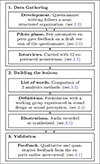 |
Figure 1. Diagram presenting the chronological path of the study. |
2.2 Sound description
Speaking about sounds is not a natural task, mainly because we usually focus on identifying the source or the action that produced the sound [26]. We would rather say, “I hear someone striking wood" rather than “I hear a close, dry, and dull sound with a fast attack" to describe the same sound event. Other aspects associated with the sound and the listening experience are used rather than the sound itself. Schaeffer [27] proposed an initial terminology to describe the properties and the listening experience of sonic objects – a sound considered in itself separated from the object producing it – thereby initiating concrete music. Although very complex for non-experts to use, this terminology opened the field of sound communication and description, proposing several criteria of musical perception (durée, facture, masse, timbre dynamique, timbre harmonique, etc.), each with several qualitative levels. A simpler approach proposed by Gaver [26] opposes two listening strategies: musical listening versus everyday listening. Extending Gaver’s work, Chion [28] identified three listening strategies: causal, reduced, and contextual. The diversity of listening strategies is echoed in Carron’s work [16], which suggests maintaining these different modes to identify description modes. If we exclude quantitative descriptions, imitation, and onomatopoeia, verbal sound descriptions can be subdivided into three main categories, as listed below.
-
Causal: Causal description refers to the origin of the sound, which Gaver [26] associates with the “everyday listening" mode. This descriptive modality primarily refers to the object or action generating the sound rather than the sound itself. Very similar sounds may have different causal descriptions if the objects producing them are different and are identified. Conversely, different objects can produce similar sounds, and referring to a sound by the object assumed to cause it, even when this identification is incorrect, constitutes a causal description.
-
Reduced: Reduced description, referring to Schaeffer’s sonic objects [27], describes the properties of the sound in an objective manner, independently of the object producing it. This descriptive modality is not intuitive, especially for non-specialists. “Loud" or “High-pitched" are example of reduced descriptors, related to an objective property of the sound and independent of the object causing it.
-
Hedonic: This category allows us to identify the sound characteristics that influence comfort or the perception of a sound. It includes attributes related to subjective or contextual judgments associated with sounds. In a specific context, we may be more interested in the meaning or judgment associated with a sound: “I hear someone striking wood. It is an unpleasant sound”, which closely aligns with the contextual listening mode described by Chion [28].
2.3 Questionnaire
The semi-structured questionnaire used in this study is presented below, and is separated into two distinct parts. The first part is aimed at obtaining descriptions of sounds according to these different levels of descriptions (Tab. 1), the second is more oriented toward sonic comfort and comfort improvement (Tab. 2). The questionnaire was developed to be completed by acousticians with experience in electric vehicles, who are hereafter referred to as “experts”.
The first part of the questionnaire that converges toward the causal and then reduced sound description of the sounds.
The second part of the questionnaire asks questions about the components having an impact on comfort.
The first version of the questionnaire was subjected to a short pilot phase. The aim of this pilot phase was to assess the clarity of each question with experts having wider knowledge of the subject. After this pilot phase, minor modifications detailed in the following were made.
In this first part, Question 1 introduces the topic and allows the participant to verbalize freely. During the pilot phase, it was observed that this initial question elicited a wide variety of topics. Additionally, it helps the participant feel comfortable from the very beginning and builds the “relational dimension” mentioned by Vermersch [21, 29] during interviews. Moreover, it adds technical or contextual elements that assist the interviewer in maintaining verbalization or restarting the dialogue if needed.
After this free verbalization step, questions 2 and 3 are aimed at narrowing the discussion to only a few sounds in order to keep the interview on schedule. Questions 4, 5, and 6 directly address the subject of sound description. The second part of the questionnaire focuses on contextual elements impacting comfort, as shown in Table 2. The last question explores a perspective related to the present work.
2.4 Participants
A list of potential participants for our semi-structured interviews, drawn from Renault’s acousticians, was selected based on their experience with electric vehicles and automotive acoustics. Each of these participants was solicited in the same way: an initial email introduced the overall topic and asked if they would volunteer for this study. Consequently, 12 participants agreed to take part in the study. A 20 min phone call provided them with further details on the subject and answered any potential questions. These calls were also useful for establishing the previously mentioned relationship, thereby ensuring an efficient interview process. The 12 participants (3 females, 9 males) with experience in automotive acoustics ranging from 5 to 26 years (an average of 17 years) all reported regular use of electric vehicles.
2.5 Interviews
The questionnaire was conducted through interviews, a modality that offers several advantages [21, 30]. First, since participants often had limited time to dedicate to the study, this verbal interview format ensured that each participant spent the same time and was involved in the same way in the questionnaire task. The primary role of the interviewer was to ensure that the questionnaire stayed on schedule.
Second, describing sounds is a difficult task for non-experts. To maximize analysis efficiency and the relevance of the lexicon, the descriptions provided needed to be both rich and as spontaneous as possible. The interviewer’s role here was to restart dialogue and help the participants verbalize their answers, following the methods detailed by Vermersch [29]. The sentences or questions used to prompt further discussion were not explicitly written in the questionnaire presented in Tables 1 and 2, but relied on several different techniques. The first technique consisted of asking for more details, additional examples, synonyms, or antonyms of descriptors spontaneously used, in order to enhance verbalization and help the participants recall frequently used words. During this exchange, the interviewer could either adopt the stance of a naïve listener [30] or that of a co-expert [13, 31] to conduct the interview effectively. The second technique used was for the interviewer to present themselves as a naïve listener and systematically ask for clarification regarding the technical terms or abbreviations mentioned, thereby maintaining consistent verbalization. This approach encouraged the participants to provide more detailed answers. The final technique for restarting the dialogue involved using technical details provided by the participant to reformulate questions, such as: “You said hooting occurred at 70 km/h; what would the sound be like at 90 km/h? How would you describe it?”. This requires a rigorous note-taking methodology during interviews to ensure that the same vocabulary as the interviewee was reused, avoiding the introduction of new words.
3 Building the lexicon
This preliminary work provided a uniform and rich description of the electric vehicle environment, serving as a necessary foundation for the subsequent analysis. To enhance this upcoming study, each interview was recorded with the approval of the participants. This resulted in 15 h of recorded discussions, transcribed into text using transcription software1 which complied with the General Data Protection Regulation (GDPR). The automated transcription was manually corrected by the first author. The objective of this section is to clarify the process by which the list of words is extracted from this text, how definitions are formulated, and how sound illustrations are selected. This method is designed to be as reproducible as possible for any other environment or population.
3.1 Lexicon definition
The definition of lexicon proposed here was inspired by the studies of Civille and Lawless [17, 32] in the context of sensory analysis: “Lexicons are standardized vocabularies that objectively describe the sensory properties of consumer products. A lexicon is composed of three elements: a list of words, definitions, and examples, making the word and definition as explicit as possible.” The goal of our lexicon is to facilitate communication between different populations who have distinct fields of expertise and do not share the same culture or listening habits. The lexicon provides a foundational vocabulary for sound and comfort description, as close as possible to the spontaneous language and usage of experts in the electric vehicle environment.
Each entry in the lexicon will include a definition and examples. The definition process is structured into different levels corresponding to the three categories of description mentioned above (causal, reduced, and hedonic). The process of selecting examples consists of identifying relevant audio illustrations.
3.2 Categorization
The lexicon was created from a list of words that first have to be identified. This list of words was built from a subcategory of the causal description, as presented above, called the “Sound Name” category, corresponding to the perceptual experience as specialists talk about it. Sound names correspond to what Dubois [33] identified as a noun or deverbal nominalization used to designate a specific sound or noise. For instance, in the sentence “The slamming noise of a door is a very important sound for customers”, the deverbal nominalization “slamming” refers to the action creating the sound and is used as a noun; we categorize it as a sound name. The first step here was to list every term categorized as a sound name that appeared in the interviews.
When building this list, no distinction was made between the interviewer’s and the participant’s usage of terms; the interviewer’s words are retained without associating any specific tags. This assumes that the interviewer remained neutral during the interviews. This choice was motivated by the fact that the interviewer’s only participation consisted in asking questions or helping the participant verbalize responses by reusing the participant’s words. The second reason for this choice related to the semantic analysis method presented in Section 3.3.2. This method relies on correlations between sentences and words to compute a semantic distance and estimate word importance within the overall text. Removing the interviewer’s sentences would result in discontinuous semantic distances and potentially inconsistent results. Although the software, Leximancer2 has an option to learn from the interviewer’s sentences and remove them from the results, which solves this issue, we compared two different methodologies and could not apply the exact same operation to both. Therefore, this software solution was not adopted. Instead, we ensured that both methods ran with the exact same input by retaining the interviewer’s words.
3.3 Candidates for the lexicon list of words
Descriptors spontaneously mentioned by participants were then classified into different categories. This classification was carried out manually by the main author and may be subject to bias or the misinterpretation of certain descriptors. For instance, some terms were categorized as sound names but could also belong to another category of description. The most notable example is “harmonic”, the use of “harmonic” might refer to a sound name: “the harmonic of the electric engine emerges from the background noise”, or corresponds to a reduced description: “the sound created by the engine is harmonic”.
In such cases, descriptors were classified into both categories, at the risk of creating false positives. Table 3 illustrates this process with a short excerpt from an interview where some descriptors appear in two categories, such as “identifiable”, because the exact meaning of that descriptor remains uncertain. It also shows that “pressure” is identified as a causal element in this context, but in other contexts, it could be categorized as a hedonic descriptor to describe the subjective perception of very low-frequency sounds on the ear.
Table showing the categorization process on an excerpt from a transcribed interview with participant named P7. Notably, the interviewer’s terms are also included, as his role was to only repeat terms that had already been mentioned by the interviewee or were present in the questionnaire presented previously.
From the aggregated sound name list built, possessing dozens of different terms, we explore two automated methodologies to rank and identify the most meaningful assets: a statistical and semantic one.
3.3.1 Statistical method
In his work, Carron [16] compiled the list of words for his lexicon by selecting the most frequently used attributes in the scientific literature, then asking experts to choose the most relevant terms to reduce the number of terms in the list. In the study presented in this paper, experts were first consulted through interviews, and a frequency analysis was conducted after to reduce the list of words spontaneously used by experts. This frequency analysis is referred to as the statistical method in the following sections.
To increase the robustness of the statistical method, an automatic text-processing technique was applied upstream to each attribute: stemming, which consists in reducing words to their stems. This process is intended to group under the same sound name attributes used in different forms. For example, for descriptors sharing the same stem, such as “harmonic”, “harmonious”, “harmonics”, “inharmonic”, and “disharmonic”, affixes are removed to retain only the stem “-harmoni-”. The candidate list of words obtained through the categorization process is then reduced to the stems of these descriptors, as illustrated in Table 4.
Snippet of the list of stems used as an entry for our analysis by the statistical and the semantic method, as well as the plausible form in which those stems might be found in transcribed interviews.
Figure 2 presents the most frequently used descriptors identified by the statistical method, which account for 91% of the words categorized as sound names in the entire set of interviews. The abscissa displays the descriptors in their most relevant form to enhance readability, often as adjectives, although occurrences are counted in other forms of the descriptors based on the stem, including sometimes their semantic opposites, such as “inharmonic”. The values obtained are expressed as the percentage of occurrences relative to the total occurrences in the list.
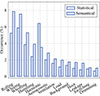 |
Figure 2. Sound Name occurrence comparison between semantic and statistical methods. Correlation coefficient between both methods of r 2 = 0.71. Ranking according to the semantic occurrence, the graph represents 91% of occurrence with the statistical method, and 94% with the semantic one. |
It is noteworthy that the descriptor “harmonic” has a higher value caused by the variety of meanings this word has. This specificity highlights an inherent bias of the statistical method: the specific context of a sentence, polysemy, homonyms, or synonyms cannot be processed conveniently. The text-processing method used could also lead to false positives due to its aggregation of attributes by stemming. Therefore, a comparison with a text analysis software that claims resilience to word occurrence [34], Leximancer, is also presented in Figure 2. This second method will be referred to as the semantic method.
3.3.2 Semantic method
Leximancer [34] is a software that relies on “concept” identification. A concept is a group of words linked around a “seed” word. Each word in this group is weighted depending on the correlation and distance to the seed. Concept occurrence is evaluated in the global text based on the correlation and distance between these weighted words. This dependency on distance and correlation with potentially unsuspected words in each weighted group justifies the choice of keeping interviewer’s sentences and questions in the analysis. This analysis inherently depends on the parametrization of the algorithms used. For the sake of reproducibility, the standard parametrization is maintained.
Concept detection is, however, supervised by providing a list of name-like concepts–pre-determined concepts that guide the software in its detection. This list is the same as the one used in the frequency analysis presented above. In addition, to enable a meaningful comparison between both methods (semantic and statistical), results are presented on the same plot, Figure 2, with their occurrence frequency in the list provided.
The list of descriptors related to the hedonic and reduced description categories is illustrated in Figure 3. The lexicon built is based on the list of terms obtained from the sound name descriptors. This list offers an overview of the descriptors used in the interviews and may serve as a basis for defining formulations later, including contextual and reduced elements.
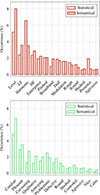 |
Figure 3. Reduced and hedonic descriptor occurrence comparison. Correlation coefficient between both methods of r2 = 0.54 for reduced descriptors and of r2 = 0.77 for hedonic descriptors. 67% of reduced occurrences detected, (59% for hedonic) by the statistical method, and 85% (95% for hedonic) with the semantic one are presented. |
Figure 2 shows a good correlation between both methods and highlights a key difference in the importance of “Harmonic” in the term ranking. This may be explained by the different usages highlighted in Section 3.3.3, all of which are indiscriminately aggregated under the root form “-harmoni-” by the statistical method, whereas the semantic method could weight an occurrence of the “harmonic” term depending on the correlation and distance between other concepts identified in the text. Despite this difference, a list of 13 candidates can be selected for our lexicon. The ranking of these sound names, offered by both methods, allows us to select which terms to add or remove depending on the desired length of our lexicon.
3.3.3 Specificity of the “Harmonic” descriptor
The noticeable difference between the two methods regarding the occurrence of the term “Harmonic”, visible in Figure 2 illustrates the specificity of this term. This descriptor plays a very specific and important role in describing the sounds of electric vehicles.
First, it can be used as a common noun to describe an emerging or tonal component of a sound. This noun is particularly used to refer to a component of the sound produced by an electric motor, for example. Terms like “Harmonic line” or “Harmonic of order N” are also used. The term “Harmonic line” will be retained in the construction of the lexicon. In this case, the descriptor is mainly used for discussions between experts and is often accompanied by technical or numerical specifications.
Second, “Harmonic” can also be used as an adjective. In this case, it refers to a sound whose pitch is proportional to the rotational frequency of the motor producing the sound. The term harmonic here is therefore an extension of the classical definition of a harmonic sound in acoustics, as found in the Larousse dictionary, namely: “A sound that can be emitted by a sound source and whose frequency is an integer multiple of that corresponding to the fundamental vibration mode. It is also called a harmonic sound”. The adjective can be used outside of a technical context, as it is rarely followed by technical or numerical specifications, unlike the noun mentioned earlier. In the construction of the lexicon, the term “harmonic-motor” will be used as an adjective to avoid confusion.
Third, the use of the adjective “Harmonic” to describe the harmony of a sound in the musical sense is very rarely observed in the interview corpus and will therefore not be considered in the remainder of our study. An example of a discussion from the interviews perfectly illustrates a case where the noun and the adjective are used alternately with different roles.
Interviewer: 3
“Okay, is there different whistling depending on car’s or engine’s type ?”
P3: 4
“So, we’re not necessarily dealing with the same types of harmonics. Because harmonics... it’s a sound that will be harmonic to the engine. So, we’re looking at a frequency that is proportional to the engine’s rotational speed. The harmonic in question will depend on the machine’s topology, the number of poles, the number of slots, etc. So, sometimes we’ll have... Typically, at Renault, we have machines where the harmonics are often orders 24 and 48. Different design choices might highlight other harmonics, for example, a harmonic at 30 and another at 60. Ultimately, this doesn’t change much... in any case, the frequency will be proportional to the engine’s rotational speed and thus to the wheels, with some emulation adjustments”.
3.4 Definitions
The same ranking process with both methodologies has been performed for the other categories of descriptions presented Section 2.2: reduced and hedonic description. A good correlation (r 2 = 0.71) among the sound names with both methods is observed for hedonic attributes (r 2 = 0.77) but less for reduced attributes (r 2 = 0.54). Therefore, the definition formulation, which is supposed to use those two categories, cannot follow an automated approach and guarantee meaningful results. Instead, a working group composed of three of the co-authors, all with backgrounds or experience in sound design or sound perception, worked on the definition formulation. This group is not from the automotive field to ensure the cross-field nature of this lexicon.
3.4.1 Final list of terms
One of the first tasks of this working group is to decide the granularity of the lexicon. This question emerged from the observation that some words identified in Figure 2 could be merged or separated into other sound names based on the proximity they have with the contextual, causal, or reduced aspects. This granularity is explained by the fact that, depending on their field of expertise, some participants could either use general terms to describe sound or more precise terms if the topic is within their area of expertise. Table 5 illustrates this merging/separating mechanism observed for the identified sound names. Background noise, often mentioned during the interviews, is composed of two distinct sounds: Rolling and Load; therefore, Background does not appear in the lexicon. Similarly, Aeroacoustic noises consist of three distinct sounds: Load, Leak, and Whistling. The latter has been replaced by Aeroacoustic Whistling to avoid confusion with Electric Whistling. The choice we make regarding this granularity will impact the lexicon’s length and, consequently, its scope.
Equivalence between general and more precise terms used.
Thus, after discussion with the working group, the final lexicon consists of the following 11 terms: Rolling, Whining, Aeroacoustic Whistling, Electric Whistling, Humming, Ventilation, Load, Hooting, Leakage, Switching, Drumming.
3.4.2 Definition formulation
The second step involves definition formulation around these sound names. For each entry of the lexicon, the following tasks are performed:
-
Interview listening: The interviews conducted were all recorded. To ease the definition formulation of the sound names, recordings of the experts describing the sound were at the disposal of the working group as well as audio recording of sounds provided by the experts.
-
Personal formulation: After listening, each member of the working group suggests their own definition of the sound. Each definition is written following the same structure: first a reduced description, second a hedonic description, then a causal description. In addition, it is advisable to use as many of the terms spontaneously as possible during the interviews.
-
Mutual formulation: The final definition is obtained from discussions between the 3 members of the working group to unanimously converge toward the most complete and synthetic definition.
Table 6 gives the occurrence of the main reduced attributes in the final definition list. This highlights the importance of the perception such as “Level”, “High Frequency” or “Emergence”. Interestingly, attributes such as “Fluctuation” or “Directive”, despite being less frequent seem decisive to describe the difference between two sounds such as “Ventilation” and “Loading”, which would be very similar otherwise. The importance of the manual formulation depends on the ability to properly identify such decisive attributes in the interviews. Table 6 enables quickly identifying the acoustic property likely to be responsible for the judgment or identification of a given sound.
Occurrence of the reduced descriptors obtained in each definition listed on the x-axis associated with sound names listed on the y-axis, for the first version of the lexicon, submitted to the experts for validation.
3.5 Audio illustration
To complete the lexicon, an audio illustration of the sounds presented is necessary. Four different categories of audio are proposed: contextual, decontextualized, synthesized, and similar. These audio samples were selected by the authors based on synthesized and recorded sounds provided by the experts, and amateur recordings.
The first audio illustration, called contextual, used raw recordings. These sounds have been recorded in real driving situations, thus possessing surrounding noises due to the driving conditions or context. Another challenge is that some of these sounds appear only in specific vehicles, driving conditions, or weather conditions that cannot all be reproduced together. All the audio illustrations available in the lexicon in this category were not made under the same conditions and thus cannot be presented with real levels or perfectly similar contexts.
The second audio illustration, called decontextualized, is aimed at complementing the first category by removing as much as possible the background noise from the contextualized illustrations. Indeed, emerging sounds such as “Hooting” or “Whistling” need careful listening in the contextual case to be identified amidst ambient noises. Therefore, a decontextualized excerpt that isolates the sound from the background noises is proposed. This makes the sound more artificial, but also more identifiable. This has been achieved either through numerical means, such as careful filtering or denoising, or through experimental means, such as physically isolating a source with infrastructures like wind tunnels or engine benches.
The third audio illustration we propose, called synthesized, is a synthesis of the sound, offering a caricature of one or more critical aspects of the sound. This synthesis was obtained using the Max environment5. Granular synthesis is ideal for broadband noise with erratic components, sometimes called granular sounds, such as “Load”, “Rolling”, or “Leak”. A granular synthesizer developed by Poovey6 was used for this synthesis. Additive synthesis was also implemented for more tonal sounds that often have precise frequencies based on simulation models provided by experts, such as “Hooting”, “Whistling”, or “Whining”. The goal is to create a standalone synthesizer, exaggerating sounds in a simple way with only a few carefully chosen parameters.
The fourth illustration, called pictorial, is an audio sample related to the sound name. It is not related to the automotive world but possesses common characteristics or behaviors associated with the sound described.
4 Results and validation
4.1 Feedback on a first version
Once we obtained the list of words, definitions, and illustrations, we again solicited the experts who participated in the interview for their feedback on the lexicon. For each sound name entry in the lexicon, a 5-point Likert scale, ranging from −2 (Totally disagree) to +2 (Totally agree), was proposed to scale their agreement with these different affirmations:
-
The sound name is relevant to describe one element of the electric vehicle soundscape.
-
The definition describes the reduced, hedonic and causal aspect of the sound well (3 different affirmations).
-
The audio illustrates the sound and its properties well (a Likert scale for each audio illustration).
A free verbalization comment field was also available at the end of the evaluation. Among the 12 participants in the interviews, 9 provided feedback. Once the validation test was completed, a 20 min phone call was scheduled to discuss more extensively suggestions to improve the lexicon. For time-saving purposes, they were asked to evaluate at least three sounds from the lexicon, but not all of them. The average ratings from the participants are reported in Table . To improve readability, all ratings for the different audio excerpts for each sound are averaged and merged as “audio”, instead of detailing the ratings for each illustration.
Average score among the experts that evaluated the first version on a 5-point Likert Scale from −2 (Totally disagree) to +2 (Totally agree).
4.2 Improvement of the lexicon
The main remarks reported during this validation process concern the necessity to add a new sound name to the lexicon corresponding to “Electric Whistling” in order to avoid possible confusion with “Whistling (Aeroacoustic)” and to complete the definition of “Whining” and “Switching”. Indeed, the experts initially reported in interviews three sounds having electric engine causes: Whining due to the gearbox, Electric whistling due to magnetic forces and Switching caused by current modulation. In the first version of the lexicon electric whistling and whining were merged under the “whining” sound name, despite having different causes, due to their perceptive proximity: both being high pitched, tonal and motor-harmonic sounds. This choice did not match expert knowledge, and resulted in the low evaluation of the definitions of “Whistling” and “Whining” obtained in Table . We thus decided to add the sound name “Electric Whistling” to the initial 10 sound names identified, with definitions of those terms making explicit the difference between the two kinds of whistling. Some of the interviewed experts that also gave negative feedback on the first version of the lexicon provided supplementary audio illustrations for each of the three sounds caused by electric engine to enhance the lexicon.
A second remark concerned the inherent difficulty of illustrating sounds with a low-frequency content. A poor audio restitution device would cut off the low frequencies, and even a good audio device would miss the haptic and vibratory perception expected in a car cabin, very often associated spontaneously with the sounds. This explains the poor evaluation of audio extracts like “Drumming” or “Humming”.
4.3 Final version of the lexicon
This lexicon is designed to elicit a list of terms used by experts to describe sounds in the automotive domain. The aim is to improve communication, verbalization about sounds and establish a shared vocabulary [23] between different groups of people interested in this specific environment. The complete version is freely accessible online7 in both French and English. The list of sound names identified, as well as complete definitions detailing their attributes, and audio illustration, are provided for each entry of the lexicon. These illustrations are specifically aimed at helping users without a technical background to grasp these attributes. The complete lexicon and the translation of terms is presented in Appendix .
The three modalities of description are visible definitions, the first sentence usually refers to the reduce aspect. Then hedonic attributes such as “identifiable”, “exhausting” are provided. The last sentence refers to the causal description, giving a short but precise explanation of the technical origin of this sound.
The entire lexicon is reported here: the list of terms as well as the definitions formulated following the working group and the feedback from experts during the validation process. The lexicon is freely accessible online at the following address: https://speak.ircam.fr/lexique/ev-descriptor/. A translation of the lexicon into English is also available on the website. The procedure proposed for translating the terms is detailed in Appendix .
4.3.1 Rolling (roulement)
Rolling is a broad band noise of rather low frequency with a preferred frequency band depending on the road surface, mainly low for a rough road surface, high for a wet road or equilibrate between low and high for a smooth road. It is broad band but less directive than “Load” and “Ventilation”. Good rolling possesses a low level, is steady, gliding and is recalls a treadmill. It is unsteady when fluctuations or emergences such as “hooting” occurs, if it is too low and erratic it gets closer to “drumming”. Rolling is a natural noise inherent to the vehicle, informing the driver about vehicle speed. The vehicle speed as well as the vehicle type mainly affect level. This noise is due to the tire/road contact, exciting among others things the wheel rim mode and panels.
4.3.2 Whining (sirènement)
Whining is an emergent sound, MF, motor-harmonic and slightly modulating. Its motor-harmonic behavior, similar to “electric whistling” inform on engine functioning and makes the sound natural. Its modulating aspect might turn dissonant, making it unpleasant or acid. Its emergent aspect may be discontinuous in acceleration phases or continuous when engine rpm (rotation per minute) is steady; giving the floor to “electric whistling”, becoming uncomfortable and bothersome. Whining is produced by meshing gears, especially regarding electric engine output.
4.3.3 Aeroacoustic whistling (sifflement aéroacoustique)
Aeroacoustic whistling corresponds to an HF sound, emergent, very directive, and steady. It is easily related to its source due to its directivity and emergence; one can say it is signed. Its frequency signature as well as its pitch vary depending on speed. It is less fluctuating and is emergent as a “leak”. It is a very unpleasant if not unacceptable sound. Aeroacoustic whistling is caused by an airflow exciting an airstrip between two pieces such as roof racks or an asperity in a ventilation duct, creating a sound similar to a flute or a whistling kettle.
4.3.4 Electric whistling (sifflement électrique)
Electric Whistling corresponds to a high or very high frequency sound, emergent and directive. It is very commonly absorbed within the “whining” sound due to its motor-harmonic and emergent behavior, despite being higher and having a slightly different behavior. Its high frequency and directive aspect recall “aeroacoustic whistling”, even though electric whistling is judged more acceptable and more coherent with the electric vehicle, but it is still considered annoying and bothersome. Electric whistling is mainly due to electric machine functioning and vibrations induced by its electromagnetic fields.
4.3.5 Humming (bourdonnement)
Humming is a very low frequency sound (≈40 Hz), making its restitution difficult with a conventional audio system. It has a high level, a motor-harmonic behavior and might be discontinuous during acceleration phases. It is oppressive and creates a feeling of pressure on the eardrums, similar to an underwater sensation; it leads to much fatigue. Humming recalls combustion engines and highlights defaults. This is a solid borne noise emitted by one or several panels in the cabin. Humming is similar to the wing flapping of a bumblebee or to “drumming” in its sonority, but less erratic.
4.3.6 Ventilation (ventilation)
Ventilation noise corresponds to a broad band noise, rather directive and medium-frequency, to which some emergent elements could be added such as “whining” or “whistling”. Its aggressive aspect is caused by an excessive level in high-frequency bands, caused by the speed rotation of the blower, or overall level. Good Ventilation contributes to a cocoon effect, but an excessive level or aggressiveness can spoil it and make the sound unpleasant. Ventilation noises are produced by the airflow going through the aeration system (blower, duct, vents, etc.) and vary due to user settings (speed, orientation, temperature, etc.).
4.3.7 Load (chargement)
Load corresponds to a broadband noise, slightly level, fluctuating, medium or high-frequency, and can be directive. A very turbulent flow would result in a flap-flap effect, also called load gust. A very directive flow is similar to a “leak”. Load is a common sound, it can be likened to background noise, its level increases with vehicle speed, making it uncomfortable and it can worsen intelligibility. Prevalent above 80 km/h, it is produced by the turbulent aspect of the air flow that excites certain car equipment such as rear-view mirrors, pillars and windshields.
4.3.8 Hooting (hululement)
Hooting is a sound corresponding to two near lines, with a fast amplitude modulation rate (≈10 Hz) very similar to beating and varying with vehicle speed. Its frequency may change from one kind of hooting to another, going from low-frequency to mid-frequency. Its emergence in comparison with a broadband noise like Rolling makes it identifiable. This sound is constant in frequency, amplitude and modulation velocity, which makes it exhausting. Hooting is produced by the cavity mode of a tire.
4.3.9 Leak (fuite)
Leak is a very fluctuating and very directive sound, rather high-frequency and high in level. It emerges from a background noise and is characterized by narrow band instead of broad band noise. It is in particular more directive, more high-frequency and more identifiable but less fluctuating than “load”. It is more fluctuating and as emergent as “aeroacoustic whistling”. Its directivity and its level, which depend on vehicle speed, are annoying if not unacceptable of Leak. It spoils the cocoon effect, the reassuring and insulating aspect of the cabin. Leak is a sound of aerodynamic origin, caused by a failure inof airtightness.
4.3.10 Switching (hachage)
The switching noise is a high-frequency noise (5–15 kHz), that is sometimes inaudible, low in level and emerging. It has a motor-harmonic or inverse harmonic-motor behavior; its pitch can increase or decrease when the engine rpm increases. It may be bothersome, shrill or very annoying depending on the engine setting or the auditive sensitivity of the person. It is similar to high-voltage line sound or tonal tinnitus. Switching is a sound of electromagnetic origin due to pulse width modulation devices.
4.3.11 Drumming (tambourinement)
Drumming is an ill-defined sound, very low-frequency, high in level and erratic. One may say it keeps a beat, similar to a drum or timpani. Drumming corresponds to a “rolling” sound where the dull aspect has been pushed to an extreme with an erratic impacting component. It causes physiological disturbance that is extremely uncomfortable with a pressure sensation in the ears recalling “humming”. Drumming occurs at low speed on an identified range of speeds between 10 and 50 km/h on a type of road surface with specific solicitation (e.g., bad surface or pavement roads).
5 Discussion
5.1 A posteriori validation
Once the first version of the lexicon was built, we studied the relevance of the semantic and statistical analysis carried out in Section 3.3. A comparison is shown in Figure 4 between three entries: the occurrence value obtained by the statistical method and the semantic method presented above, compared with the statistic occurrence in definitions newly built by the working group.
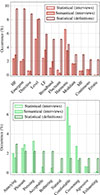 |
Figure 4. Reduced and hedonic descriptors occurrence comparison in formulated definitions. The descriptor occurrence frequency, computed for the last versions of the definitions is compared to the frequency of descriptors obtained during the interviews. Descriptors are ranked by occurrences in the definitions. |
These results illustrate the considerable importance, unanimously identified by the three methods, of the descriptor “level” to describe sounds in the car cabin, in addition to the expected terms related to frequency band such as “HF”, “LF”, and “MF”. This reveals the first-order importance of these dimensions even in verbal descriptions of sounds. This figure and the results also give us the limitations of both automated methods. This is especially highlighted by the poor performance for descriptors such as “fluctuation” or “directive”, which were nonetheless identified as being of great importance by the working group. The importance of these descriptors is illustrated by their ability to differentiate sounds of the lexicon that are similar regarding other aspects, such as “ventilation” and “load”. This difference between results obtained from interviews and those from the working group formulation can be explained by the habits of acousticians when working on sound. In this context, level is a first-order concern, and frequency analysis is very commonly used for identifying the characteristics of a sound, which encourages bandwidth descriptors such as “MF”, “HF”, and “LF”. Consequently, during the interview process, attributes related to these aspects were those mentioned first and often the most frequently, before giving more precise attributes to enhance the description.
5.2 Standardized lexicon
Building lexicons is a common practice in the sensory analysis field. Civille and Lawless proposed a methodology [17], standardized in ISO 8586:2023. Despite having similarities with the work presented here, the usage of such a lexicon detailed in the ISO standard is very different, it mainly aims at improving expert-to-expert communication to embrace the finest details of a product. On the other hand, soundscape exploration offers methodologies to explore soundscapes through spontaneous descriptions of a place by users. A methodology inspired by both approaches is proposed in this work to build a lexicon that improves expert-to-naive communication.
The definition process is carried out here with a small working group to ensure coherence between definitions. A comparison with a similar working group with different backgrounds could highlight which aspects are the most widely shared. Similarly, a group of participants interviewed with a different background would bring meaningful comparisons to this lexicon.
5.3 Signals-to-words approach
This lexicon is based on a “words-to-sound” approach, as presented by Carron [16], in which a set of descriptions is reviewed to extract relevant terms and associated sounds. This approach contrasts with a “sounds-to-words" approach, which consists in eliciting verbal descriptions directly from a corpus of sounds [14]. In the case of industry-standard sounds, both approaches should converge on the same terms. For instance, “humming" spontaneously emerged during the interviews and consequently appears in the lexicon, but it is also a sound studied extensively in the industry that can be reliably identified from a sound corpus [35]. This recognition pattern can even be automated through the construction of numerical models or indicators [36].
Similarly, other industry-standard sounds such as “whining" or “electric whistling" [37, 38] are well understood and can be predicted through modeling. Thus, this lexicon could potentially be extended with a “signals-to-words" approach, classifying an input signal into one of the lexicon entries, an approach encouraged by the capabilities of machine learning to classify sounds, such as vehicle recognition [39], or to separate sources in the car cabin to estimate sound quality [40].
Such an approach would complement the lexicon and facilitate its use, but it would ultimately lack the keystone necessary for comfort studies and improvement that our lexicon provides: the contextual dimension and the subjective judgments associated with these sound sources. Categorizing each entry of a lexicon in a robust manner using psychoacoustic indicators would constitute a result in itself, as studied by Rosi et al. [41]. Moreover, Rosi et al. also demonstrated that even widely used descriptors such as “bright", which possess reliable psychoacoustic correlates, do not have a shared metaphorical meaning, depending on the background of the people using it [13].
6 Conclusion and perspective
6.1 Conclusion
This work provides a list of 11 sound names associated with sonic objects occurring inside the car cabin. Interestingly, these sound names may refer either to a technical source or event at the origin (Ventilation, Switching, Rolling, Leak, Load), to a perceptual characteristic (Drumming, Whining, Hooting, Humming), or to a combination of these (Electric Whistling, Aeroacoustic Whistling), yet they are all derived from experts’ spontaneous descriptions. These descriptions are based on their experience of the vehicle and the sources they commonly identify. For each of these sounds, a definition describing its acoustic and contextual properties is provided and completed with audio illustration. The resulting 11-term lexicon, as formalized above, offers a complete and accessible description and illustration of these sound environments. The lexicon is then validated by the same experts through a process allowing for the necessary corrections.
Finally, the translation process, from French to English, detailed in appendix, confirms the identification of the 11 sound names by their use in the literature, sometimes with different wordings of the same concept.
6.2 Perspectives
Beyond the framework of facilitating communication presented above, this lexicon can also be the first milestone for developing a “culture of sound” in the electric vehicle by building a common ground for the description of sound, by changing the listening experience of users now aware of these sounds, and by training engineers’ ears. Such a culture would become the ideal playground for meaningful and engaging sound design by giving a description of accepted sounds and unaccepted sounds that naturally exist in this sound environment. In future studies in this field, this lexicon may be used as a framework to evaluate the impact of a designed sound on the driver’s perception and sonic comfort improvement, by offering a tool enhancing communication around sounds and their contexts.
Acknowledgments
The authors are very grateful for the 12 acousticians from Renault group who shared their time and knowledge to achieve this work.
Funding
This publication was supported by ANRT under a CIFRE contract [2021/1063] with the Renault group.
Conflict of interest
The authors declare the following financial relationships which may be considered as potential competing interests: Mr. Matthieu Duroyon, was enrolled in the Ph.D.-program of the Renault Group with the Université de Technologie de Compiègne (UTC) and IRCAM.
Data availability statement
The complete recordings of the interviews were conducted with industry professionals and cannot be freely shared due to confidentiality concerns. However, the processed data used to generate the figures shown in the manuscript, such as the list of words, occurrences found, etc., are available upon request from the corresponding author.
Author contribution statement
Matthieu Duroyon: Conceptualization, Methodology, Software, Formal analysis, Investigation, Data Curation, Writing – Original Draft, Visualization. Patrick Susini: Conceptualization, Methodology, Validation, Writing – Review and Editing, Supervision. Nicolas Misdariis: Conceptualization, Methodology, Writing – Review and Editing, Supervision. Nicolas Dauchez: Conceptualization, Writing – Review and Editing, Supervision. Louis-Ferdinand Pardo: Conceptualization, Resources, Writing – Review and Editing. Eléonore Vialatte: Software, Validation, Data Curation.
References
- K. Bijsterveld, S. Krebs: Listening to the Sounding Objects of the Past: The Case of the Car. Sonic Interaction Design, 2013, pp. 3–38. [Google Scholar]
- K. Bijsterveld: Acoustic Cocooning. The Senses and Society, 2010. [Google Scholar]
- G. Chelkoff, P. Amphoux, et al.: Bienêtre sonore é domicile. Architectures du logement et potentiel de confort sonore. Grenoble: CRESSON, 1991. [Google Scholar]
- G. Chelkoff: Du confort acoustique au confort sonore: évolutions des pratiques et de l’architecture du logement, 1993. [Google Scholar]
- M.P. De Looze, L.F. Kuijt-Evers, J. Van Dieen: Sitting comfort and discomfort and the relationships with objective measures. Ergonomics 46, 10 (2003) 985–997. [Google Scholar]
- P. Vink and S. Hallbeck: Editorial: Comfort and discomfort studies demonstrate the need for a new model. Applied Ergonomics 43, 2 (2012) 271–276. [Google Scholar]
- L. Langeveld, R. van Egmond, R. Jansen, E. Özcan: Product sound design: intentional and consequential sounds. Advances in Industrial Design Engineering 47, 3 (2013) 47–73. [Google Scholar]
- K. Govindswamy, G. Eisele: Sound character of electric vehicles. Technical report, SAE Technical Paper, 2011. [Google Scholar]
- M. Münder, C.-C. Carbon: A literature review [2000–2022] on vehicle acoustics: investigations on perceptual parameters of interior soundscapes in electrified vehicles, in: Frontiers in Mechanical Engineering, Vol. 8, 2022a. [Google Scholar]
- D.J. Swart, A. Bekker, J. Bienert: The subjective dimensions of sound quality of standard production electric vehicles. Applied Acoustics 129 (2018) 354–364. [CrossRef] [Google Scholar]
- N. Misdariis: Recherche-projet en design sonore: le cas emblématique du véhicule électrique. Sciences du Design 5, 1 (2017) 115–130. [Google Scholar]
- N. Ahmadpour, G. Lindgaard, J.-M. Robert, B. Pownall: The thematic structure of passenger comfort experience and its relationship to the context features in the aircraft cabin. Ergonomics 57, 6 (2014) 801–815. [Google Scholar]
- V. Rosi, O. Houix, N. Misdariis, P. Susini: Investigating the shared meaning of metaphorical sound attributes: bright, warm, round, and rough. Music Perception 39, 5 (2022) 468–483. [Google Scholar]
- A. Faure: Des sons aux mots, comment parle-t-on du timbre musical? Ph.D. thesis, 2000. [Google Scholar]
- T. Porcello: Speaking of Sound: Language and the professionalization of sound-recording engineers. Social Studies of Science 34, 5 (2004) 733–758. [Google Scholar]
- M. Carron, N. Misdariis, T. Rotureau, F. Dubois, P. Susini: Speaking about sounds: a tool for communication on sound features. Journal of Design Research 15 (2017) 85. [CrossRef] [Google Scholar]
- L.J. Lawless, G.V. Civille: Developing lexicons: a review. Journal of Sensory Studies 28, 4 (2013) 270–281. [Google Scholar]
- M. Mzali: Une approche psycholinguistique et cognitive du sentiment de confort: de l’analyse linguistique é la physique76. Ph.D. thesis, 2006. [Google Scholar]
- G. Delepaut: Contribution de la linguistique cognitive é l’identification du confort: analyse des discours des passagers sur le confort en train. Ph.D. thesis, 2007. [Google Scholar]
- C. Guastavino: The Ideal Urban Soundscape: Investigating the Sound Quality of French Cities. Acta Acustica united with Acustica 92, 945 (2006) 951. [Google Scholar]
- J. Tardieu, P. Susini, F. Poisson, P. Lazareff, S. McAdams: Perceptual study of soundscapes in train stations. Applied Acoustics 69, 12 (2008) 1224–1239. [Google Scholar]
- M. Duroyon, N. Misdariis, P. Susini, N. Dauchez, L.-F. Pardo, E. Vialatte: How do automotive acousticians talk about sounds and comfort in electric vehicle? in: 10th Convention of the European Acoustics Association Forum Acusticum 2023, European Acoustics Association, 2023, pp. 6335–6342. [Google Scholar]
- P. Susini, O. Houix, N. Misdariis, P. Faramaz, G. Pellerin: The speak project: a collaborative platform for presenting and sharing sound lexicons, in: 16e Congrès Français d’Acoustique de la SFA, 2022. [Google Scholar]
- P. Susini, O. Houix, N. Misdariis, R. Barthélémy: The speak methodology for sound design, in: INTER-NOISE and NOISE-CON Congress and Conference Proceedings. Vol. 270. Institute of Noise Control Engineering, 2024, pp. 9214–9223. [Google Scholar]
- N. Misdariis, A. Cera, R. Barthelemy, L. Worms, L.-F. Pardo: Collaborative sound design for automotive applications-the sound for electric vehicle as an emblematic use case, in: INTER-NOISE and NOISE-CON Congress and Conference Proceedings. Vol. 270. Institute of Noise Control Engineering, 2024, pp. 2389–2400. [Google Scholar]
- W.W. Gaver: What in the world do we hear?: An ecological approach to auditory event perception. Ecological Psychology 5, 1 (1993) 1–29. [Google Scholar]
- P. Schaeffer: Traité des objets musicaux [Treatise on Musical Objects]. Editions du Seuil, Paris, 1966. [Google Scholar]
- M. Chion: Guide des objets sonores: Pierre Schaeffer et la recherche musicale, 1983. [Google Scholar]
- P. Vermersch: L’entretien d’explicitation. ESF, 2014. [Google Scholar]
- A. Paté, J.-L. Le Carrou, B. Navarret, D. Dubois, B. Fabre: Influence of the electric guitar’s fingerboard wood on guitarists’ perception. Acta Acustica united with Acustica 101, 2 (2015) 347–359. [CrossRef] [Google Scholar]
- L. Van Audenhove: Expert Interviews and Interview Techniques for Policy Analysis. Vrije University, Brussel Retrieved May, 5, 2007, 2009. [Google Scholar]
- G.V. Civille, H.T. Lawless: The Importance of Language in Describing Perceptions. Journal of Sensory Studies 1, 3, 4 (1986) 203–215. [Google Scholar]
- D. Dubois: Categories as acts of meaning: the case of categories in Olfaction and audition. Cognitive Science Quarterly 1 (2000) 35–68. [Google Scholar]
- A. Smith: Automatic extraction of semantic networks from text using Leximancer, in: Companion Volume of the Proceedings of HLT-NAACL 2003-Demonstrations, 2003, pp. 23–24. [Google Scholar]
- F. Doleschal, G.-T. Badel, J.L. Verhey: Rumbling, humming, booming - Perception of vehicle interior noise at low engine speeds. Applied Acoustics 197 (2022) 108915. [Google Scholar]
- F. Doleschal, J.L. Verhey: Modeling the perceptions of rumbling, humming and booming in the context of vehicle interior sounds. Applied Acoustics 210 (2023) 109441. [Google Scholar]
- J. Perret-Liaudet, A. Carbonelli, E. Rigaud, B. Nelain, P. Bouvet, C.J. Vialonga: Modeling of gearbox whining noise. Technical report, SAE Technical Paper, 2014. [Google Scholar]
- A. Carbonelli, E. Rigaud, J. Perret-Liaudet: Vibro-acoustic analysis of geared systems - predicting and controlling the whining noise, in: Automotive NVH Technology. Springer, 2015, pp. 63–79. [Google Scholar]
- H. Chen, Z. Zhang: Hybrid neural network based on novel audio feature for vehicle type identification. Scientific Reports 11, 1 (2021) 7648. [Google Scholar]
- H. Liu, H. Zhang, X. Huang, Z. Kong, J. Yang, Y. Yang: Research on noise source separation and sound quality prediction for electric powertrain. Applied Acoustics 199 (2022) 109034. [Google Scholar]
- V. Rosi: The metaphors of sound: from semantics to acoustics. a study of brightness, warmth, roundness, and roughness. Ph.D. thesis, Sorbonne Université, 2022. [Google Scholar]
- U. Sandberg: Tyre/road noise: myths and realities. Statens vägoch transportforskningsinstitut, 2001a. [Google Scholar]
- T. Li, R. Burdisso, C. Sandu: Literature review of models on tire-pavement interaction noise. Journal of Sound and Vibration 420 (2018) 357–445. [Google Scholar]
- M. Münder, C.-C. Carbon: Howl, whirr, and whistle: the perception of electric powertrain noise and its importance for perceived quality in electrified vehicles. Applied Acoustics 185 (2022b) 108412. [CrossRef] [Google Scholar]
- V. Prakash, O. Sauvage, J. Antoni, L. Gagliardini: Assessment of electric powertrain whining noise contribution under early-stage design uncertainties, 2023. [Google Scholar]
- O. Harris, P. Lanlois, A. Gale: Electric vehicle whine noise - gear blank tuning as an optimization option. Gear Technology (2019) 64–73. [Google Scholar]
- R. Sottek: Progress in calculating tonality of technical sounds, in: INTER-NOISE and NOISE-CON Congress and Conference Proceedings. Vol. 249. Institute of Noise Control Engineering, 2014, pp. 3319–3327. [Google Scholar]
- S. Wang, J.-L. Jouvray, T. Kalos: NVH technologies and challenges on electric powertrain. SAE Technical Paper 2018-01-1551, SAE International, 2018. [Google Scholar]
- M. Helfer: General aspects of vehicle aeroacoustics. Lecture Series-von Karman Institute for Fluid Dynamics, 5, 2005, p. 9. [Google Scholar]
- J. Park, H. Lee: Numerical simulations of whistle noise from air ventilation duct. SAE Technical Paper 2005-01-2496, SAE International, 2005. [Google Scholar]
- K. Qian, J. Wang, Y. Gao, Q. Sun, J. Liang: Interior noise and vibration prediction of permanent magnet synchronous motor. Journal of Vibroengineering 20, 5 (2018) 2225–2236. [Google Scholar]
- K. Genuit: Analysis of annoyance of low-frequency beat inside a vehicle. Journal of The Acoustical Society of America 103 (1998) 2849–2850. [Google Scholar]
- S. Hatano, T. Hashimoto: Booming index as a measure for evaluation booming sensation, in: INTER-NOISE and NOISE-CON Congress and Conference Proceedings, Vol. 2000. Institute of Noise Control Engineering (2000) 4332–4336. [Google Scholar]
- G.C. Peng: SEA modeling of vehicle wind noise and load case representation. SAE Technical Paper 2007-01-2304, SAE International, 2007. [Google Scholar]
- W.B. Coney, J.Y. Her, J.A. Moore: Characterization of the wind noise loading of production automobile greenhouse surfaces, in: ASME International Mechanical Engineering Congress and Exposition. Vol. 26751. American Society of Mechanical Engineers, 1997, pp. 411–418. [Google Scholar]
- L.R. Molisani, R.A. Burdisso, D. Tsihlas: A coupled tire structure/acoustic cavity model. International Journal of Solids and Structures 40, 19 (2003) 5125–5138. [Google Scholar]
- J. Yi, X. Liu, Y. Shan, H. Dong: Characteristics of sound pressure in the tire cavity arising from acoustic cavity resonance excited by road roughness. Applied Acoustics 146 (2019) 218–226. [CrossRef] [Google Scholar]
- Y. Fang, T. Zhang: Sound quality of the acoustic noise radiated by pwm-fed electric powertrain. IEEE Transactions on Industrial Electronics 65 (2018) 4534–4541. [Google Scholar]
- M. Sarrazin, K. Janssens, H. Van der Auweraer: Influence of inverter PWM control schemes on noise signature of electric powertrains, in: ICSV20, 2013, pp. 7–11. [Google Scholar]
- A. Peyghambari, A. Dastfan, A. Ahmadifard: Noise spectrum shaping in power electronic converters by New RPWM technique, in: The 5th Annual International Power Electronics, Drive Systems and Technologies Conference (PEDSTC 2014), 2014. [Google Scholar]
- S.-H. Na, Y.-G. Jung, Y.-C. Lim, S.-H. Yang: Reduction of audible switching noise in induction motor drives using random position space vector PWM. IEE Proceedings - Electric Power Applications 149, 3 (2002) 195–200. [Google Scholar]
- H. Yamaguchi, M. Shibaoka, A. Kudo: Study and application of prediction method for low frequency road noise. SAE Technical Paper 2010-01-0507, SAE International, 2010. [Google Scholar]
- S. Gong, B. Peng, D. Chen, Y. Tang, P. Wang: Diagnosis of road-induced drumming noise of passenger car based on multiple coherence method, in: C. S. o. A. E. (China SAE), editor, Proceedings of China SAE Congress 2018: Selected Papers, Lecture Notes in Electrical Engineering, Singapore. Springer, 2020, pp. 737–748. [Google Scholar]
Appendix A
The development of the lexicon was conducted in French; consequently, the terms and definitions were originally formulated in French as well. The publication of the lexicon, together with the process underlying its creation, raises the question of its translation into English. The identified terms often go beyond standard technical nomenclature and instead reflect the spontaneous habits of a population, which makes translation challenging.
To address this issue, a bibliographic study of the scientific literature in automotive acoustics was conducted to support the choices behind each term’s translation. The objective was to identify research articles explicitly addressing the sounds described in the lexicon. The alignment of these sounds with the proposed translations was then verified by comparing the technical descriptions provided in the literature with the technical explanations and causes formulated by experts during the interviews.
Rolling (roulement)
Rolling noise has been extensively studied in the literature, with frequent references using the terms tire/road noise, road noise [42] or tire-pavement interaction noise (TPIN) [43]. Since these expressions are highly technical and primarily causal, they do not perfectly align with the type of sound names originally used in the French lexicon. However, the term rolling noise also appears in the literature and is lexically very close to the French term roulement. It will therefore be retained in the lexicon.
Whining (sirènement)
This noise is intrinsic to electric vehicles, specifically to electric motorization, and has been widely identified as one of the new acoustic challenges of electric vehicles. Several studies [44–46] refer to it using the term “whining”, while some prefer “howling” [44, 47]. Less commonly, terms such as “whirring”, “whistling”, or “harmonic order noise” are also encountered [48]. Among these, “whining” is the most frequently used and will therefore be retained as the translation.
Aeroacoustic whistling (sifflement aéroacoustique)
The term “whistling” is used [49, 50] without any risk of misinterpretation or confusion about the sound it designates. To distinguish it clearly from the other whistling, “electric whistling”, already present in the lexicon, the translation adopted will therefore be “aeroacoustic whistling”.
Electric whistling (sifflement électrique)
The translation of this term is more delicate, primarily because of its possible confusion with whining, which has similar causes and acoustic properties. Simply describing a sound as “high-pitched” and “engine related” is insufficient to determine whether it corresponds to electrical whistling or whining. Technical details provided in the literature, referring to electromagnetic phenomena rather than gear meshing, help to ensure that the reference indeed concerns electric whistling and not whining. Some studies explicitly use the term “whistling” to designate this electromagnetic sound generated by the motor [51], making a clear distinction between whistling and whining. By analogy with aeroacoustic whistling, the adopted translation will therefore be electric whistling, also corresponding to the literal translation from French.
Humming (bourdonnement)
This term is already well established in the context of internal combustion vehicles, particularly diesel-powered ones. In our case, it appears in the lexicon of electric vehicles because it was repeatedly mentioned during interviews and reflects the listening habits of acousticians. Several references address this low-frequency sound, often described as “booming”, “rumbling”, or “humming” [52, 53], depending on the causes of the sound. Doleschal et al. [35] provided a precise definition and detailed description of the acoustic properties of each of these three terms. Following their distinction, the term “humming” for “bourdonnement”, is described as follows: “humming sounds have prominent unmodulated low-frequency components (with frequencies below about 150 Hz […]). The prototypical sound for humming consisted of a single 50 Hz pure tone”.
Ventilation (ventilation)
This term has a strictly causal origin, as its sound name directly refers to the physical source producing it. Its translation is therefore straightforward and obtained by simply translating the object responsible for the sound.
Load (chargement)
Aeroacoustic sounds are often indistinctly referred to as “wind noise” or “aeroacoustic noise” [54]. In the construction of our lexicon, three distinct sounds from the family of aeroacoustic noises were identified: “aeroacoustic whistling”, already translated above, “leakage”, and “load”. The generic translation of “wind noise” or “aeroacoustic noise” is therefore unsatisfactory for our purposes. The load sound, resulting from aerodynamic pressure on a panel, is however, explicitly mentioned by Coney [55] with the same origins, as “load noise”. This term will therefore be retained in our lexicon translation.
Hooting (hululement)
This sound has been studied extensively [56, 57] and is referred to as “tire cavity noise” or “tire cavity resonance”. As with rolling noise, these terms are highly technical and not sufficiently intuitive for potential non-specialist users of the lexicon. For this reason, despite their unanimity in the scientific literature, they are not retained here. Instead, we adopt the literal translation of the French term “hululement”: “hooting”. During the interviews, experts originally selected this word for its resemblance to the hooting of an owl, which they found analogous to the tire cavity mode sound. It is assumed that this association will be equally meaningful for English speakers.
Leak (fuite)
Like load, which is often grouped under aerodynamically induced sounds without distinction, references to sounds of similar technical origin as leak often use the general term wind noise. Pengsea [54], however, explicitly refers to it using the descriptors noise leakage or acoustic leakage. To ensure precision and avoid confusion, we retain acoustic leakage in the lexicon translation.
Switching (hachage)
This sound is related to electric motorization, and care must be taken during the translation process to ensure that the term or subject of study indeed refers to switching noise and not to electric whistling or whining. In studies addressing this sound, it is often mentioned through a causal description such as “power width modulation noise” [58, 59]. Other terms include “whistling” or “electromagnetic interference” [60] or “switching noise” [58, 61]. To avoid confusion with electric whistling or the use of overly technical terms, the translation retained in the lexicon will be “switching noise”.
Tambourinement (drumming)
This sound is already established in the context of internal combustion vehicles and was studied due to its strong negative impact on user comfort. Its translation poses no difficulty, and is frequently referred to as “drumming noise” [62, 63].
“D’accord, il y a des sifflements différents en fonction de différents modèles de voiture ou des moteurs?”
“Alors on n’est pas forcément sur les mêmes types d’harmoniques. Parce que les harmoniques... c’est un son qui va être harmonique au moteur. Donc on est sur une fréquence qui est proportionnelle á la vitesse de rotation du moteur. L’harmonique en question elle va dépendre de la topologie de la machine, du nombre de pôles, du nombre d’encoches etc. donc parfois on va avoir des... Typiquement nous chez Renault on a des machines dont les harmoniques c’est souvent l’ordre 24 et 48 qui ressortent. On peut avoir des choix différents qui vont faire ressortir d’autres harmonique, par exemple une harmonique 30 et puis une autre harmonique 60. Finalement ça ne va pas changer beaucoup... dans tous les cas la fréquence va être proportionnelle à la vitesse de rotation du moteur et donc des roues avec un jeu d’émules...”
Cite this article as: Duroyon M. Susini P. Misdariis N. Dauchez N. Pardo L.-F. & Vialatte E. 2026. A lexicon to describe specific sounds of the electric car cabin: verbal approach toward comfort improvement. Acta Acustica, 10, 21. https://doi.org/10.1051/aacus/2026013.
All Tables
The first part of the questionnaire that converges toward the causal and then reduced sound description of the sounds.
The second part of the questionnaire asks questions about the components having an impact on comfort.
Table showing the categorization process on an excerpt from a transcribed interview with participant named P7. Notably, the interviewer’s terms are also included, as his role was to only repeat terms that had already been mentioned by the interviewee or were present in the questionnaire presented previously.
Snippet of the list of stems used as an entry for our analysis by the statistical and the semantic method, as well as the plausible form in which those stems might be found in transcribed interviews.
Occurrence of the reduced descriptors obtained in each definition listed on the x-axis associated with sound names listed on the y-axis, for the first version of the lexicon, submitted to the experts for validation.
Average score among the experts that evaluated the first version on a 5-point Likert Scale from −2 (Totally disagree) to +2 (Totally agree).
All Figures
|
Figure 1. Diagram presenting the chronological path of the study. |
| In the text | |
|
Figure 2. Sound Name occurrence comparison between semantic and statistical methods. Correlation coefficient between both methods of r 2 = 0.71. Ranking according to the semantic occurrence, the graph represents 91% of occurrence with the statistical method, and 94% with the semantic one. |
| In the text | |
|
Figure 3. Reduced and hedonic descriptor occurrence comparison. Correlation coefficient between both methods of r2 = 0.54 for reduced descriptors and of r2 = 0.77 for hedonic descriptors. 67% of reduced occurrences detected, (59% for hedonic) by the statistical method, and 85% (95% for hedonic) with the semantic one are presented. |
| In the text | |
|
Figure 4. Reduced and hedonic descriptors occurrence comparison in formulated definitions. The descriptor occurrence frequency, computed for the last versions of the definitions is compared to the frequency of descriptors obtained during the interviews. Descriptors are ranked by occurrences in the definitions. |
| In the text | |
Current usage metrics show cumulative count of Article Views (full-text article views including HTML views, PDF and ePub downloads, according to the available data) and Abstracts Views on Vision4Press platform.
Data correspond to usage on the plateform after 2015. The current usage metrics is available 48-96 hours after online publication and is updated daily on week days.
Initial download of the metrics may take a while.