


| Issue |
Acta Acust.
Volume 9, 2025
Topical Issue - Development of European Acoustics in 20th Century
|
|
|---|---|---|
| Article Number | 62 | |
| Number of page(s) | 11 | |
| DOI | https://doi.org/10.1051/aacus/2025046 | |
| Published online | 21 October 2025 | |
Technical & Applied Article
History of the Institute of Acoustics and Speech Communications of TU Dresden
Technische Universität Dresden, Institut für Akustik und Sprachkommunikation, 01062 Dresden, Germany
* Corresponding author: This email address is being protected from spambots. You need JavaScript enabled to view it.
Received:
4
May
2025
Accepted:
30
August
2025
Abstract
At the TU (formerly TH) Dresden, acoustics is part of the faculty of electrical engineering. Its development started in 1911 when Heinrich Barkhausen was appointed Professor for “low-current technology", which was an umbrella for both, acoustics and communications engineering. Barkhausen contributed to the field of acoustics, e.g., with the first device for loudness measurement. After the war and the retirement of Barkhausen, several new institutes were established from which we mention: (1) the Institute of Electro- and Building Acoustics led by Walter Reichardt, contributing to many fields of technical acoustics, and (2) the Institute of Telecommunications Engineering supervised by Kurt Freitag, contributing to speech acoustics with the design of a vocoder and the measurement of speech quality. When the GDR performed a “higher education reform" in 1969, the acoustical activities were concentrated in a laboratory for “communications and data acquisition" which included five chairs in acoustics, sensors, speech, and measurement. This step took into account the growing role of computer technology. After the political changes in 1990, the number of chairs was reduced to two which is expressed by the today’s name “Institute of Acoustics and Speech Communications". The paper is finished by an overview on the recent activities of the institute.
Key words: History of acoustics / History of speech technology / TU Dresden
© The Author(s), Published by EDP Sciences, 2025
 This is an Open Access article distributed under the terms of the Creative Commons Attribution License (https://creativecommons.org/licenses/by/4.0), which permits unrestricted use, distribution, and reproduction in any medium, provided the original work is properly cited.
1 Introduction
The Technical University of Dresden will celebrate its 200th anniversary in 2028. It is one of the most important locations in Europe where academic teaching and research in the field of acoustics has developed. This development was first acknowledged in English in a presentation at the Forum Acusticum 2023 [1]. This article is a revised and extended version of that contribution.
The structure of this paper follows the timeline shown in Figure 1. Section 2 describes the period up to World War II (WW II), during which acoustics was implicitly pursued at several facilities of the then university. Section 3 shows how acoustics subsequently received its own institute in 1950, with research into speech acoustics also being conducted at the Institute of Telecommunications. Section 4 describes the activities in a joint laboratory following a university reform in the German Democratic Republic (GDR). Section 5 provides an outlook on acoustic activities after German reunification in 1990.
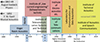 |
Figure 1 Timeline showing the structures which were most important for the development of acoustics in Dresden. |
At the end of the paper, Section 6 gives a reference to current work on the research of the history of acoustics in Dresden, which is documented in a historical university collection.
2 Early development until WW II
2.1 The beginning of activities in acoustics
The Technische Bildungsanstalt (Technical School) Dresden, the germ cell of today’s Technische Universität (TU), was founded in 1828. The founding director was Wilhelm G. Lohrmann (1796–1840). He cooperated in his own scientific work with Friedrich W. Opelt (1794–1868) who was also interested in musical acoustics and published a book on the tone system in 1852. He invented a special version of the hole siren for his experiments [2].
It took some years before the new school reached an academic level in education. In 1842, August Seebeck (1805–1849) was appointed director of the school andprofessor for physics and natural science. He was an important physicist with special interest in acoustics [3]. After his death the field of acoustics became deserted.
After the turn of the century, there were two activities in the field of room acoustics. The school had been upgraded to a Technische Hochschule (TH) meanwhile. Richard Heger (1846–1919) was a teacher at the famous Holy Cross High School and also honorary professor at the TH Dresden. He had research activities in room acoustics since 1890 and read lectures on this topic since 1910. He was given the opportunity to establish a laboratory for experiments in room acoustics at the TH in 1912 which he used until his death ([4], pp. 18–19). His acoustical papers, which appeared between 1911 and 1917, continue the work of the founder of scientific room acoustics, Wallace Sabine (1868–1919), from 1900.
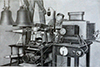 |
Figure 2 The “Laboratory for sound photography" of J. Biehle in Bautzen. Equipment for recording bell sounds. Reproduction from [5], p. 98. |
The other early representative of the field of room acoustics with a special focus on church acoustics was Johannes Biehle (1870–1941, Fig. 2). He was already a renowned director of church music in Bautzen when he additionally started his work in physics at the TH Dresden in 1908. He worked at the Physical Institute where he had his own laboratory, but in 1916, he changed to the TH Berlin where he was the founding director of the Institute of Room Acoustics, Church Music, Organs and Bells [6].
2.2 The era of Heinrich Barkhausen
A continuous development of acoustics at TH Dresden started with the appointment of Heinrich Barkhausen (1881–1956, Fig. 3) as professor for “low current engineering" (which we would call telecommunications today) in 1911. He came from Berlin where the big electric companies like Siemens & Halske had installed laboratories for research and development in telephony and (later) radio technology. They required new knowledge on speech production, hearing, and speech transmission. This is the reason why electroacoustics developed under the umbrella of telecommunications in that times.
 |
Figure 3 Bust of Heinrich Barkhausen, installed at his 100th birthday in the Barkhausen building of the TU Dresden. Artist: Walter Howard (1910–2005). Photograph by Rolf Dietzel. |
Barkhausen considered this development in his scientific work very early. In his dissertation (Göttingen 1906) on the generation of vibrations, he had already treated electrical, mechanical, and acoustic vibrations from a uniform point of view. He elaborated the electromechanical analogies so far that the symbolic method of AC networks could be transferred to mechanic and acoustic systems. The symbolic method (commonly known as “jω calculation") was invented by Karl Steinmetz (1856–1923) in 1889.
Barkhausen is mainly known for his contribution to theory and application of the electronic valve and his work as academic teacher [7]. The acoustic community values him for his numerous contributions in its field. They started with underwater acoustics while Barkhausen was conscripted during WW I [8, 9].
As early as 1924, he and his colleague G. Lewicki published a paper on the sensitivity of the ear to non-sinusoidal tones [10]. The results showed that when listening to compound sounds, effects occur that could later be interpreted as masking effects. To honor Barkhausens’s work in psychoacoustics, the “bark" unit for the critical bands remembers his name.
One of the problems that remained unsolved until 1925 was how to measure the loudness of any sound event and to clarify the relationship between the subjectively perceived loudness of a sound and the physically measured sound pressure. H. Barkhausen is credited withhaving created a suitable measurement method and unit of measurement for loudness – the phon, which was first defined using the binary and only later using the decimal logarithm. The novel, subjective measurement method was based on the principle of an auditory comparison between the loudness of the sound to be measured and the adjustable loudness of a reference tone. The company Siemens & Halske, Berlin, built the device from 1927 onwards as the “Barkhausen Phonometer for Practical Use" (Fig. 4). Barkhausen worked on its further development with his doctoral student U. Steudel [12]. Siemens & Halske produced two versions of an objective sound level meter from around 1935.
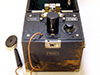 |
Figure 4 Loudness meter from Barkhausen, produced by Siemens & Halske starting 1927. Photograph of the device in the HAPS collection of TU Dresden [11], no. 15–1. |
After several attempts, Barkhausen succeeded with the expansion of the capacity by an extraordinary professorship for telecommunication systems and technical acoustics in 1938. It was given to Walter Wolman (1901–2003) who also came from Siemens & Halske. Unfortunately, the following WW II and the switch tomilitary research prevented the intended consolidation of the acoustics branch. However, Barkhausen was not personally involved in military research and was not a member of the Nazi Party [13]. Along with nearly the whole town, the TH Dresden was completely war destroyed in February 1945, and the work was suspended.
2.3 The Institute of Scientific Photography
The sound film played an important role in the application of electroacoustics since its invention in the 1920s. Dresden had a long tradition in the photographic industry, and therefore the TH Dresden included an important Institute of Scientific Photography. Hellmut Frieser (1901–1988), who also came from Siemens & Halske, was the director of this institute since 1936. He directed research projects on sound film techniques.
The institute was also active in the development of spectral analyzers. Because of the high expenses of electronic filters, ways to exploit various physical effects for generating spectra in the audible frequency range were investigated. Frieser started the development of a sound spectrograph based on an optic-photographic method, which was even continued after the war [14].
3 New institutes after WW II (1950–1968)
3.1 Post-war development
Dresden belonged to the Soviet occupation zone, from which the German Democratic Republic (GDR) emerged in 1949. The destroyed university was reopened in 1946, and the core campus was rebuilt by 1950. During this time, H. Barkhausen was still representing the low-current engineering. Since W. Wolman was no longer available for the “practical subjects", Barkhausen tried to win Walter Reichardt (1903–1985, Fig. 5) as a university lecturer which finally resulted in his appointment as professor and director of the new Institute of Electroacoustics in 1950. Reichardt had finished his Dr.-Ing. thesis at Barkhausen in 1930 and worked as senior engineer in various German broadcasting companies [9, 15].
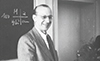 |
Figure 5 Walter Reichardt in a lecture. Photograph by Rolf Dietzel. |
Barkhausen’s successor in 1950 was Hans Frühauf (1904–1991), who came from the radio industry and played a key role in its reconstruction in the GDR [16]. He ensured a significant expansion of low-current technology in Dresden by establishing finally six institutes [17]. One of these was the Institute for Telecommunications, which was important for the development of speech acoustics in the GDR. It was directed by the physicist Kurt Freitag (1901–1977, Fig. 6). He had an excellent background in research and industrial development in the field of wire-bound communications technology [18].
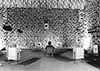 |
Figure 6 Kurt Freitag (left), director of the Institute of Telecommunications, and Walter Tscheschner. Private photograph from 1955. |
A separate Faculty of Electrical Engineering was established in 1952. The TH Dresden was upgraded to a university (TU) in 1961.
During World War II, two devices had been developed at Bell Laboratories in the USA that would have a global impact on the development of acoustic signal processing: the sound spectrograph and the vocoder. These devices received appropriate attention at the newly established institutes. The Institute of Electroacoustics worked on the development of devices for “visible speech" (cf. Sect. 3.2), while the Institute of Telecommunications developed an own version of a vocoder (cf. Sect. 3.3).
3.2 Institute of Electro- and Building Acoustics
The Institute of Electroacoustics was founded in 1950 and renamed to Institute of Electro- and Building Acoustics in 1951. W. Reichardt developed the institute into an important facility in research and teaching; it was the leading institute in acoustics in the GDR. He was well connected with colleagues from the Federal Republic of Germany and various Eastern Bloc countries. Until his retirement, 419 Dipl.-Ing., 41 Dr.-Ing., and 3 habilitation degrees were acquired at the institute [9]. The institute was installed in a new building, today known as the Barkhausen building, and was equipped with a reverberation room as well as two anechoic rooms (Fig. 7).
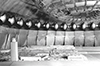 |
Figure 7 Synthetic sound field in the big anechoic chamber, erected 1952–1957 with a shell volume of 2.000 m3. Photograph from 1978 by Rolf Dietzel. |
In the first years, speech analysis was one of the research topics of the institute [19]. Apart from the general importance for the spectrum analysis in acoustics, it was generally believed that the optical representation of spectra would be suitable for hearing-impaired people to “read the speech" in real time.
Reichardt influenced very much the development of electro- and building acoustics as academic subjects. Among other books, he published a textbook [20] on electroacoustics which gained the status of a standard work. He made a particularly important contribution with the further development and and systematic treatment of the electromechanical analogies. This made it possible to easily incorporate transducers into the analysis of electroacoustical systems. Since 1956, the institute has conducted intensive research into the theory and application of transducers made of piezoelectric ceramics.
According to a contemporary summary [21], the study of the effects of noise on humans earned the institute its greatest international reputation. They significantly influenced the standardization of noise measurement by creating models of human noise perception. It should be mentioned in this context that the development of an adequate terminology and a correct usage of physical units was always in the focus of Reichardt. He was a very active member of German and international boards for standardization.
In the area of the acoustical design of rooms, extensive work was conducted on model measurement technology. This approach was originally proposed by Friedrich Spandöck (1904–1966) in Munich 1934. W. Reichardt has expanded this technique of “impulse sound tests" through his own contributions and made it suitable for numerous practical applications. Almost all major cultural buildings constructed in the post-war GDR were acoustically designed at the institute. One outstanding achievement was the optimization of the Congress Hall in Berlin (Fig. 8), which, as a circular, domed structure, posed a nearly “insolvable" challenge. In connection with these projects, psychoacoustic studies were also conducted on subjective spatial impressions and audibility.
 |
Figure 8 Model of the congress hall of the “House of Teachers", constructed for acoustical planning at TU Dresden. Original building erected at the Alexanderplatz in Berlin 1961–1964. Photograph by Rolf Dietzel. |
During the country’s post-war reconstruction, many practical questions in building acoustics played a role, and these were addressed at the institute. A wall laboratory and a ceiling laboratory were set up for this purpose. The problems of sound insulation gained particular importance. In the 1960s, these tasks were increasingly taken over by the Academy of Architecture of the GDR. At the institute, this work was increasingly replaced by the topic of noise abatement. In addition, cooperation with industry in the field of electronic vibration measurement technology was intensified. Considering this development, the institute changed its name to the Institute of Technical Acoustics in 1967. The title of the Reichardt’s renowned textbook was changed accordingly [22].
Before Reichardt retired in 1968, two of his scholars were appointed professors: Wolfgang Kraak (1923–2015) for Technical Acoustics in 1966 and Arno Lenk (1930–2017) for Electromechanical Measurement Technology in 1967. W. Reichardt was appointed Fellow of the “Acoustical Society of America" in 1966, an honor rarely bestowed upon scientists from the Eastern Bloc.
3.3 Institute of Telecommunications Engineering
The Institute of Telecommunications Engineering of TH Dresden was founded as one of the last new institutes in 1954. The tasks of the institute included all aspects of wire-bound telecommunication, among them speech transmission and speech quality measurement.
As already mentioned, the vocoder raised strong interest in the post-war times. There was an obvious question whether this innovation was really able to transfer speech economically with reasonable quality. The best way to find an answer was the investigation of a prototype, which was designed in the framework of theDr.-Ing. thesis of Eberhard Krocker (1927–2022) in the years 1954–1957 [23]. Curiously, an analog investigation was performed in the Western part of Germany in Kiel at exactly the same time [24].
This was the starting point for speech technology research at TH/TU Dresden. When Krocker finished his thesis, the field of work was transferred to Walter Tscheschner (1927–2004, Figs. 6 and 9), thus initializing his scientific carrier as a pioneer of electronic speech signal processing. As a first task, he investigated the objective evaluation of speech comprehensibility, which resulted in an analysis of the German sounds, summarized in his Dr.-Ing. thesis from 1961 [27].
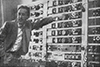 |
Figure 9 W. Tscheschner in front of the Dresden vocoder in 1962. Newspaper photograph [25], reproduced from [26]. |
The unusual continuation of this research beyond the promotion was mainly thanks to the linguist GeorgF. Meier (1919–1992), director of the Institute of Phonetics and Communications Sciences of the Humboldt University Berlin since 1961. He organized a network in speech communications research in the GDR which included the activities of Tscheschner. Therefore it was possible to install a project “physics of speech" which resulted in his habilitation in 1967. It shifted the focus from speech analysis to speech synthesis, which was still serving as an experimental method to clarify the acoustic structure of speech sounds. The production of synthetic speech for communication purposes was at that time at most a question for the future [28].
4 Laboratory for Communications and Data Acquisition (1968–1990)
4.1 The higher education reform of 1968/69
The so-called third higher education reform of the GDR in 1968/69 was intended to respond to new demands of the 1960s in society, science, and technology. The reform is seen controversially today, because it increased the influence of the state and party organs at the universities. But the engineering faculties benefited from the new structures, because they reflected the challenges of the upcoming electronic age. The Faculty of Electrical Engineering was re-organized in scientific units called “Wissenschaftsbereiche", which we translate here as laboratories.
In this way, the Laboratory for Communications and Data Acquisition was installed at TU Dresden. It integrated the Institute of Technical Acoustics and parts of two other institutes with the aim to address the future requirements, which were expected to occur at the interfaces of the computer with its environments as well as with the human user. This decision was a very early one, compared to other German universities, and we count it as the founding act of the recent institute. The laboratory included four working groups, which are described very briefly in the following [15, 17]. The name was simplified to Laboratory for Acoustics and Measuring Technology in 1977. A specialist colloquium was organized by the laboratory every fourth year (Fig. 10).
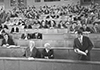 |
Figure 10 Representatives of the Dresden acoustics at the 8th “Fachkolloquium Informationstechnik" in January 1975. Left (2nd row) A. LENK; first row W. Reichardt, W. Wöhle, and W. KRAAK (standing). Photograph by ROLF DIETZEL. |
The reform must be seen in the context of the establishment of large industrial units (“Kombinate") in the GDR. The most important industrial complexes for the laboratory were based in Dresden: The Kombinat Mess-elektronik combined important capacities in vibration technology and acoustic measurement. The Kombinat Robotron was responsible for the development of computer technology in the GDR and therefore also bore responsibility for human-computer interaction.
4.2 Working group on technical acoustics
The field of technical acoustics was considered so important that two professorships were established. The aforementioned W. Kraak was in effect the successor of W. Reichardt. Additionally, Walter Wöhle (1928–2020) was appointed professor for Technical Acoustics in 1970.
W. Kraak’s scientific activities included room acoustics, the effects of noise, hearing aid acoustics, and noise control [15]. In the 1970s, research into the effects of noise focused on the experimental development of a model known as the “Dresden Hearing Impairment Model" [29]. In the 1980s, he conducted studies on hearing loss in patients with inner ear damage and the treatment of recruitment through appropriate hearing aid design.
The fields of work of W. Wöhle included technical acoustics, structure-borne sound, and noise reduction. He was particularly interested in sound propagation in buildings, with particular emphasis on industrial housing. He further developed the method of statistical energy analysis for this purpose. The possibilities and limitations of this method were determined [15].
Research in room acoustics was continued in cooperation with the Academy of Architecture. A new component was the application to industrial buildings, e.g.workshops, where also the model method was included.
The Dresden Opera House, built by Gottfried Semper during the years 1871–1878, definitely deserves mention. It was largely destroyed in 1945 and its reconstruction was of enormous importance for the city’s cultural identity. Conservation measures had been underway since 1952. Consulting on the restoration of the building’s famous acoustics was provided by W. Reichardt and later by W. Kraak. A 1:20 model for impulse sound tests was used from 1969 to 1977 in two periods depending on the progress of the architectural planning. The real reconstruction work began in 1977; the reopening took place on the 40th anniversary of the war destruction in 1985. Prior to this, the TU Dresden conducted room acoustic testing of the rebuilt auditorium in February/March 1984 (Fig. 11).
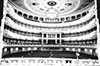 |
Figure 11 Auditorium of the Semper opera Dresden during acoustic testing in 1984 with marked measuring places and a directional loudspeaker on the stage. Photograph by Rolf Dietzel, reproduced from [30]. |
W. Kraak started together with two other scholars of Reichardt, the specialist in room and building acoustics Wolfgang Fasold (1931–2020) and the specialist in soundproofing Werner Schirmer (1931–2021), the edition of a handbook of acoustics which summarizes at more than 1.800 pages the state of the art [31]. The 85 authors were mostly associated with the institute for many years, so that the highly valued handbook offers an authentic picture of the “Dresden School of Acoustics". W. Kraak also introduced the first lectures on digital signal analysis at the faculty. He retired in 1988. His successor was Detlef Hamann for the short time of only 3 years.
4.3 Working group on electromechanical measurement technology
A. Lenk continued in his new group the work on electromechanical systems, transducers, and measurement technology. He developed the corresponding theory to a high level and summarized it in a textbook of three volumes [32].
Among the first areas of application was the continuation of the aforementioned work on piezoelectric transducers which dates back to the Dr.-Ing. thesis of A. Lenk on piezoelectric bending oscillators in 1957. Their use in vibration measurement and testing technology was a big research field. In collaboration with industry, a complete range of piezoelectric vibration sensors, including primary electronics, was developed, which dominated the market in the Eastern Bloc [33]. In the field of vibration testing technology, methods were developed for estimating the lifetime of devices under mechanical excitation.
A second major area of research involved transducers based on the piezoresistive effect. This work goes back to the Dr.-Ing. thesis of Ludwig Walther (1926–2013), also a scholar of W. Reichardt, on semiconductor strain gauges in 1962. Because piezoresistive sensors are suitable for particularly low pressures, their investigation not only led to industrial applications, but also enabled their use as miniature pressure sensors in medicine, especially in cardiology [33]. Figure 12 shows a piezoelectric catheter blood pressure sensor.
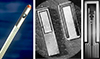 |
Figure 12 Piezoresistive catheter pressure sensors for medical applications. From left: Assembled catheter, chip with counter body (back) and chip layout. Photograph © TU Dresden 1978. |
Research into improving the quality of loudspeakers was also conducted in close collaboration with industry. Models were developed for the vibration behavior of loudspeaker cones and for its sound radiation. Furthermore, the relationship between loudspeaker parameters and subjective listening impressions was investigated, resulting in the development of a model for objective sound evaluation [15].
4.4 Working group on speech communications
W. Tscheschner started as a lecturer in the new laboratory and was appointed professor for Speech Communications in 1972. Until his retirement in 1992, he supervised 37 Dr.-Ing. and Habilitation theses in the field of speech synthesis and recognition. The scientific results were applied in numerous projects of the Kombinat Robotron as well as the Kombinat Musikinstrumente. He developed new teaching activities in speech communications.
W. Tscheschner launched a program in speech recognition and synthesis as soon as the first computers for these purposes became available. The first computer-controlled synthesis system was still built with discrete transistors (Fig. 13). In 1978, a further development was carried out in collaboration with the Robotron company, which operated with a process computer and was demonstrated as a timetable information system at the Leipzig Trade Fair.
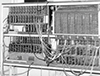 |
Figure 13 Electronics part of the three-formant speech synthesizer SYNI 2 (1975). Photograph © TU Dresden. |
A comparable solution was introduced a year later in West Germany with the “Karlchen" information system, what means that the group of W. Tscheschner played at the international level. This changed when computer technology in the GDR fell behind as a result of the technology embargo. W. Tscheschner’s research group and their partners at Robotron therefore pursued the development of speech synthesis technology in embedded systems controlled by microprocessors. Examples of applications can be found in rehabilitation technology; for example, a talking pocket calculator was developed for use in schools for the blind.
A subfield of spoken language research that remains of great importance today is the study of prosody (speech melody and rhythm) and its communicative function. W. Tscheschner had been studying this since 1964 [34]. This work was the main component of the collaboration with Humboldt University in Berlin and was continued there with Dieter Mehnert’s graduate theses on word and sentence prosody [35].
Work in speech analysis and recognition was directed not only on algorithms, but also on psychoacoustic models of sound perception. This work was carried out in close cooperation with the Institute for Musical Instrument Making in Zwota.
4.5 Working group on electronic measurement technology
The field of theory and application of electronic measurement was represented by Uwe Frühauf as lecturer since 1969, professor for Electronic Measurement Technology since 1975 [36]. The group had extensive teaching responsibilities and carried out research on computer-controlled measurement and testing technology, including software and hardware development. Because the research of the group was not primarily directed to acoustic problems, it is not further discussed here. The chair was transferred to the Institute of Circuits and Systems in 1992.
5 Institute of Acoustics and Speech Communications
5.1 Reorganization in the political turn of 1990
In the framework of the political changes of 1989/90, the “laboratories" were re-organized to institutes. The Laboratory of Acoustics and Measuring Technology regained the historical name Institute of Technical Acoustics. The number of chairs was reduced to three in the following years, namely Technical Acoustics (Wöhle),Electromechanical Systems (Lenk), and Speech Communications (Tscheschner). The annual German Acoustics Conference (DAGA) was organized for the first time in Dresden in 1994 to demonstrate the integration after the German re-unification.
When A. Lenk retired in 1996, no successor was appointed. His work was continued by his collaborator Günther Pfeifer who held the status of an adjunct professor since 1992 [37]. He transferred the field of Electromechanical Systems to the Institute of Semiconductors and Microsystems in 2007, where it is continued after his retirement in 2010 by Uwe Marschner.
This means that the following two chairs with their corresponding working groups remained in the end. Considering the designations of the two remaining groups, the name of the institute was changed in Institute of Acoustics and Speech Communications in 1999.
5.2 Working group on acoustics
When W. Wöhle retired in 1993, the successor at the chair of Technical Acoustics was Peter Költzsch. He came from the TU Bergakademie Freiberg where he acted as professor for Fluid Mechanics. He supervised numerous research projects in the traditional fields of the institute, but also in new areas like sound generation, structure-borne noise, and flow acoustics [38]. Following an own design, the institute received an aeroacoustic wind tunnel with extremely quiet jet flow in 1996.
The name of the chair was changed to Communications Acoustics when it was posted for succession. It was passed to Ute Jekosch in 2005. She came from theRensselaer Polytechnic Institute, Troy, N. Y., and was especially known for her work in sound design and sound quality [39]. She initiated the construction of a laboratory for multimodal measurement (Fig. 14). In 2008 she brought the DAGA conference to Dresden for the second time. Additionally, the capacity of the institute was extended by the appointment of Wolfgang Klippel as honorary professor for electroacoustics in 2007.
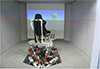 |
Figure 14 View of the Multimodal Measurement Laboratory of the Chair of Acoustics and Haptics. Photograph by Jürgen Landgraf. |
The chair of Communications Acoustics was deputized by Ercan Altinsoy, a specialist in auditory-tactile interaction, since 2009. He was appointed professor for Acoustics and Haptics in 2016. His research group is investigating the relationship between physics (sound/vibration) and perception (auditory/haptic) [40, 41]. Furthermore the interaction of these two modalities is a topic of interest. The investigations are conducted in the fields of e.g. vehicle acoustics, household appliance acoustics, audio reproduction systems, psychoacoustics, vibroacoustics and VR. The aim is to create models which can predict (product-) perception of the acoustic and haptic properties [42]. He is one of the core team members of the cluster of excellence CeTI (Centre for Tactile Internet with Human-in-the-Loop) at TU Dresden (https://www.ceti.one/).
5.3 Working group on speech communications
When Tscheschner was retired in 1992, he was succeeded by Rüdiger Hoffmann who was already present as lecturer in Human-Machine Communications since 1986. He guided the Dresden sub-project of the German Verbmobil, which offered a tremendous chance under the new political conditions in the 1990s. He supervised 36Dr.-Ing. and habilitation theses as well as numerous cooperation projects. He expanded the educational activities of the chair to the theory of signals and systems [43]. This resulted in the re-naming of the chair to Systems Theory and Speech Technology in 2007 and in the expansion of the scientific focus to cognitive systems.
Peter Birkholz started as Junior Professor for Cognitive Systems with tenure track as successor of Hoffmann in 2014 and was appointed full professor for Speech Technology and Cognitive Systems in 2020. His group researches at the confluence of speech technology, phonetics, and machine learning. It follows a major inter-disciplinary course and encompasses speech technology, instrumental and acoustic phonetics and medical technology. The research group develops and maintains one of the most advanced systems for articulatory speech synthesis [44, 45] (https://www.vocaltractlab.de) and techniques to recognize silently produced speech [46–48]. One of the silent speech techniques has led to the spin-off of Altavo GmbH in Dresden, which aims to give laryngectomies a new voice.
Two international conferences in speech communications were hosted in Dresden: the Third International Conference on Speech Prosody in 2006 and the Interspeech in 2015.
6 The historic acoustic-phonetic collection
The historic acoustic-phonetic collection (HAPS) has its roots in the rather long history of acoustics and speech communications at TU Dresden, which definitely means both institutes treated in Section 3. A variety of old devices from half a century of research and development had been originally preserved in a “low-current engineering" collection. Its “acoustical" subset forms the core of the HAPS.
The establishment of HAPS was externally driven by the closure of the Chair of Phonetics at Humboldt University Berlin in 1996, which, as described above, was a partner institution of the Dresden institute. The chair, which had a history going back in the 19th century, owned a collection of experimental phonetics equipment, which was merged with the Dresden collection at the suggestion of D. Mehnert. The combined collection was opened in 1999 under the label HAPS (Fig. 15).
 |
Figure 15 Historic acoustic-phonetic collection (HAPS), first display room (experimental phonetics). Photograph © TU Dresden/Kustodie/R. Kretzschmar. |
A significant expansion occurred in 2006 when the Chair of Phonetics at the University of Hamburg was also closed, and its important historical collection was entrusted to HAPS for preservation. Since then, HAPS has been a unique place where the development of (speech) acoustics and experimental phonetics from its beginnings in the 19th century to the introduction of computers can be demonstrated in great detail [49].
The HAPS is supervised by the author since his retirement in 2014. The objects are made available in two catalogue volumes [11, 50]. The collection is a place for historic research in communications sciences and media technology, which is summarized in a recent paper [51].
Following the cataloging of the material objects, the extensive and valuable archival material will be examined. The first step will focus on the history of spoken language technology with special respect to the development in Dresden, for which a bibliography [52] and an introductory text volume [53] have been published so far. In this sense, this article can be understood as a snapshot of the current activities.
Cite this article as: Hoffmann R. 2025. History of the Institute of Acoustics and Speech Communications of TU Dresden. Acta Acustica, 9, 62. https://doi.org/10.1051/aacus/2025046.
Acknowledgments
The author likes to express his cordial thanks to Dr.-Ing. Rolf Dietzel for many inspiring dialogues and for contributing photographs from his archive.
Conflicts of interest
The author declares no conflicts of interest in regards to this article.
Data availability statement
No new data were created or analysed in this study.
References
- R. Hoffmann: History of the Institute of Acoustics and Speech Communications of the TU Dresden. In: Proceedings of the 10th Convention of the European Acoustics Association, Forum Acusticum 2023, Torino, Italy, 11–15 September, 2023, pp. 1245–1252. [Google Scholar]
- M. Fürstenau: Friedrich Wilhelm Opelt. Allgemeine Deutsche Biographie 24 (1887) 366. [Google Scholar]
- P. Költzsch: August Seebeck – der erste Akustiker der Dresdner “Universität”. In: Mehnert D., Kordon U., Wolff M., Eds. Systemtheorie, Signalverarbeitung, Sprachtechnologie (Studientexte zur Sprachkommunikation, vol. 68). TUD Press, Dresden 2013, pp. 295–302. [Google Scholar]
- W. Voss: Dresdens grosse Mathematiker. Dresdner Universitäts Journal, special issue no. 2001-1. [Google Scholar]
- J. Biehle: Die Tagung für Orgelbau in Berlin vom 27.–29. September 1928. Hgg. vom Verband der Orgelbaumeister Deutschlands e. V. Bärenreiter-Verlag, Kassel, 1929. [Google Scholar]
- R. Laue: Johannes Biehle zum 150. Geburtstag gewidmet. Stadtverwaltung Bautzen, Kulturbüro 2020. [Google Scholar]
- K. Lunze (Ed.): Barkhausen-Ehrung der Akademie der Wissenschaften der DDR und der TU Dresden. Festschrift, Dezember 1981 (Wiss. Zeitschr. der TU Dresden, Separatdruck: Reihe 4, Elektrotechnik-Elektronik, Nr. 6/7). [Google Scholar]
- R. Dietzel: Technische Akustik an der Technischen Hochschule Dresden von 1911 bis 1950. In: Sprachsynthese. Herrn Prof. Walter Tscheschner zum 70. Geburtstag. Edited as CD-ROM, TU Dresden 1997. [Google Scholar]
- P. Költzsch: Erwin Meyer – Akustik in Göttingen; Heinrich Barkhausen und Walter Reichardt – Akustik in Dresden (Schriftenreihe zur Geschichte der Akustik; 11). Pro BUSINESS, Berlin 2019. [Google Scholar]
- H. Barkhausen, G. Lewicki: Die Empfindlichkeit des Ohres für nicht sinusförmige Töne. Physikalische Zeitschrift 25, 21 (1924) 537–541. [Google Scholar]
- R. Hoffmann: Historische Objekte der Sprachakustik. Katalog der historischen akustisch-phonetischen Sammlung (HAPS) der Technischen Universität Dresden, zweiter Teil (Studientexte zur Sprachkommunikation, vol. 100). TUD Press, Dresden, 2021. [Google Scholar]
- H. Barkhausen, U. Steudel: Die Lautstärke von Geräuschen. Hochfrequenztechnik und Elektroakustik 41, 4 (1933) 115–116. [Google Scholar]
- W. Mathis: Barkhausen, Heinrich. NDB-online, published 1.4.2025. Available at https://www.deutsche-biographie.de/118657240.html#dbocontent [Google Scholar]
- R. Hoffmann: Der historische Beitrag der TH/TU Dresden zur Entwicklung von Sprachsichtgeräten. Fortschritte der Akustik, DAGA 2021, 46. Jahrestagung für Akustik, Wien, 15.–18. 8. 2021, pp. 629–632. [Google Scholar]
- P. Költzsch (Ed.): Ehrenkolloquium Reichardt – Kraak – Wöhle. Festschrift, 2. ergänzte Aufl, TU Dresden, 2003. [Google Scholar]
- W. Bärwald: Hans Frühauf. In: 125 Jahre VDE Bezirksverein Dresden e. V. – Entwicklung der Elektrotechnik, Elektronik und Informationstechnik. VDE, Dresden, 2017, pp. 171–179. [Google Scholar]
- K. Lunze: Die Herausbildung der Elektrotechnik als wissenschaftliche Disziplin an der Technischen Universität Dresden. Wiss. Zeitschr. der TU Dresden 42, 2 (1993) 3–16. [Google Scholar]
- W. Bärwald: Kurt Freitag. In: 125 Jahre VDE Bezirksverein Dresden e. V. – Entwicklung der Elektrotechnik, Elektronik und Informationstechnik. VDE, Dresden, 2017, pp. 153–162. [Google Scholar]
- S. Steinbach: Ein schnell arbeitender Suchton-Spektrograf für den Sprachfrequenzbereich. Nachrichtentechnik 6, 8 (1956) 365–368 and 9, 396–400. [Google Scholar]
- W. Reichardt: Grundlagen der Elektroakustik, 2nd edn and 3rd edn. Geest & Portig, Leipzig 1952, 1954, 1960. [Google Scholar]
- W. Kraak: “Institut für Elektro- und Bauakustik” – “Institut für Technische Akustik”. Hochfrequenztechnik und Elektroakustik 77, 1 (1968) 1–4. [Google Scholar]
- W. Reichardt: Grundlagen der Technischen Akustik. Geest & Portig, Leipzig, 1968. [Google Scholar]
- E. Krocker: Aufbau und Untersuchung eines Übertragungssystems für synthetische Sprache. Wiss. Zeitschr. der TH Dresden 6 4, (1956/57) 757–776. [Google Scholar]
- G. Krohm: Erfahrungen bei der Entwicklung eines Vocoders und Messungen der mit ihm erhaltenen Verständlichkeit. Zeitschrift für Angewandte Physik 10, 2 (1958) 56–65. [Google Scholar]
- H.K.: Die Geisterstimme aus Dresden. Wochenpost 36 (1962) 11. [Google Scholar]
- P. Plassmeyer, H. Schönrich and I. Jentzen (eds.): Der Schlüssel zum Leben. 500 Jahre mechanische Figurenautomaten. Sandstein Verlag, Dresden, 2022. [Google Scholar]
- W. Tscheschner: Verfahren und Ergebnisse der Analyse deutscher Vokale und Konsonanten. In: Proceedings of the 4th International Congress of Phonetic Sciences, Helsinki, 4–9 September, 1961, Mouton, The Hague 1962, 280–298. [Google Scholar]
- R. Hoffmann and D. Mehnert: Roots of Electronic Speech Communication in Linguistics and Engineering: the Genesis of the Chair of Speech Communication of the TU Dresden as a Case Study. In: HSCR 2021, Proceedings of the 4th International Workshop on the History of Speech Communication Research, Prague, 27–28 August, 2021 (Studientexte zur Sprachkommunikation, vol. 101), pp. 83–92. [Google Scholar]
- W. Kraak: Investigations on criteria for the risk of hearing loss due to noise. In: J.V. Tobias (Ed.), Hearing research and theory, vol. 1. Academic Press, New York, 1981, pp. 187–303. [Google Scholar]
- W. Kraak et al.: Bericht zur raumakustischen Erprobung der wiederaufgebauten Semperoper. TU Dresden, Sektion Informationstechnik, Bereich Akustik und Messtechnik, 1984. [Google Scholar]
- W. Fasold, W. Kraak, W. Schirmer (Eds.): Taschenbuch Akustik. 2 Bände. VEB Verlag Technik, Berlin, 1984. [Google Scholar]
- A. Lenk: Elektromechanische Systeme. 3 Bände. VEB Verlag Technik, Berlin, 1971, 1974, 1975. [Google Scholar]
- G. Gerlach, G. Pfeifer: Von den elektromechanischen Wandlern und Infrarotdetektoren zur Mikrosystemtechnik. TU Dresden, Fakultät Elektrotechnik und Informationstechnik, 2003. [Google Scholar]
- W. Tscheschner: Ein Beitrag zur Messung der Stimmbandgrundfrequenz. In: Proceedings of the 3rd Acoustics Conference, Budapest, 1–8 June, 1964, pp. 456–461. [Google Scholar]
- D. Mehnert: Zur Grundfrequenzanalyse von Sprachsignalen. Wiss. Ztschr. Humboldt-Univ. zu Berlin, Ges.-Sprachwiss. Reihe 23, 5 (1974) 597–599. [Google Scholar]
- U. Frühauf: Grundlagen der elektronischen Messtechnik. Geest & Portig, Leipzig, 1977. [Google Scholar]
- A. Lenk, R. G. Ballas, R. Werthschützky, G. Pfeifer: Electromechanical Systems in Microtechnology and Mechatronics. Electrical, Mechanical and Acoustic Networks, their Interactions and Applications. Springer, Berlin, 2011. [Google Scholar]
- P. Költzsch: Akustische und strömungsakustische Forschungen. Ein Beitrag zur Verminderung der Schallemission technischer Aggregate. Berichte und Abhandlungen/Berlin-Brandenburgische Akademie der Wissenschaften 2 (1996) 37–88. [Google Scholar]
- U. Jekosch: Voice and speech quality perception. Assessment and evaluation. Springer, Berlin, 2005. [Google Scholar]
- M.E. Altinsoy: Auditory tactile interaction in virtual environments. Shaker, 2006. [Google Scholar]
- M.E. Altinsoy: The quality of auditory-tactile virtual environments. Journal of the Audio Engineering Society 60, 1/2 (2012) 38–46. [Google Scholar]
- Website TU Dresden, Chair of acoustics and haptics. Available at https://tu-dresden.de/ing/elektrotechnik/ias/aha/forschung (10 April 2023). [Google Scholar]
- R. Hoffmann: Signalanalyse und -erkennung. Springer, Berlin, 1998. [Google Scholar]
- P. Birkholz: 3D-artikulatorische Sprachsynthese. Logos, Berlin, 2005. [Google Scholar]
- P. Birkholz: Modeling consonant-vowel coarticulation for articulatory speech synthesis. PLoS One 8, 4 (2013) e60603. https://doi.org/10.1371/journal.pone.0060603. [Google Scholar]
- C. Wagner, P. Schaffer, P. Amini Digehsara, M. Bärhold, D. Plettemeier, P. Birkholz: Silent speech command word recognition using stepped frequency continuous wave radar. Scientific Reports 12 (2022) 4192. [Google Scholar]
- S. Stone, P. Birkholz: Cross-speaker silent-speech command word recognition using electro-optical stomatography. In: Proceedings of the 45th International Conference on Acoustics, Speech, and Signal Processing (ICASSP 2020), Barcelona 2020, pp. 7849–7853. [Google Scholar]
- Website TU Dresden: Chair of speech technology and cognitive systems. Available at https://tu-dresden.de/ing/elektrotechnik/ias/stks/forschung (10 April 2023). [Google Scholar]
- R. Hoffmann: 20 Jahre historische akustisch-phonetische Sammlung (HAPS) der TU Dresden 1999–2019 (Studientexte zur Sprachkommunikation, vol. 97). TUD Press, Dresden, 2020. [Google Scholar]
- D. Mehnert: Historische phonetische Geräte. Katalog der historischen akustisch-phonetischen Sammlung (HAPS) der Technischen Universität Dresden, erster Teil (Studientexte zur Sprachkommunikation, vol. 62). TUD Press, Dresden, 2012. [Google Scholar]
- R. Hoffmann: The historic acoustic-phonetic collection of TU Dresden after finishing the catalogue. In: Proceedings of the IEEE HISTELCON, Florence, 7–9 September, 2023, IEEE, pp. 31–34. [Google Scholar]
- R. Hoffmann: Bibliografie zur Geschichte der Sprachtechnologie an der Technischen Universität Dresden bis 2019 (Studientexte zur Sprachkommunikation, vol. 96). TUD Press, Dresden, 2020. [Google Scholar]
- R. Hoffmann: Geschichte der Sprachtechnologie an der Technischen Universität Dresden. Erster Band: Prolog in Berlin, Hamburg und Dresden (Studientexte zur Sprachkommunikation, vol. 106). TUD Press, Dresden, 2024. [Google Scholar]
Cite this article as: Hoffmann R. 2025. History of the Institute of Acoustics and Speech Communications of TU Dresden. Acta Acustica, 9, 62. https://doi.org/10.1051/aacus/2025046.
All Figures
|
Figure 1 Timeline showing the structures which were most important for the development of acoustics in Dresden. |
| In the text | |
|
Figure 2 The “Laboratory for sound photography" of J. Biehle in Bautzen. Equipment for recording bell sounds. Reproduction from [5], p. 98. |
| In the text | |
|
Figure 3 Bust of Heinrich Barkhausen, installed at his 100th birthday in the Barkhausen building of the TU Dresden. Artist: Walter Howard (1910–2005). Photograph by Rolf Dietzel. |
| In the text | |
|
Figure 4 Loudness meter from Barkhausen, produced by Siemens & Halske starting 1927. Photograph of the device in the HAPS collection of TU Dresden [11], no. 15–1. |
| In the text | |
|
Figure 5 Walter Reichardt in a lecture. Photograph by Rolf Dietzel. |
| In the text | |
|
Figure 6 Kurt Freitag (left), director of the Institute of Telecommunications, and Walter Tscheschner. Private photograph from 1955. |
| In the text | |
|
Figure 7 Synthetic sound field in the big anechoic chamber, erected 1952–1957 with a shell volume of 2.000 m3. Photograph from 1978 by Rolf Dietzel. |
| In the text | |
|
Figure 8 Model of the congress hall of the “House of Teachers", constructed for acoustical planning at TU Dresden. Original building erected at the Alexanderplatz in Berlin 1961–1964. Photograph by Rolf Dietzel. |
| In the text | |
|
Figure 9 W. Tscheschner in front of the Dresden vocoder in 1962. Newspaper photograph [25], reproduced from [26]. |
| In the text | |
|
Figure 10 Representatives of the Dresden acoustics at the 8th “Fachkolloquium Informationstechnik" in January 1975. Left (2nd row) A. LENK; first row W. Reichardt, W. Wöhle, and W. KRAAK (standing). Photograph by ROLF DIETZEL. |
| In the text | |
|
Figure 11 Auditorium of the Semper opera Dresden during acoustic testing in 1984 with marked measuring places and a directional loudspeaker on the stage. Photograph by Rolf Dietzel, reproduced from [30]. |
| In the text | |
|
Figure 12 Piezoresistive catheter pressure sensors for medical applications. From left: Assembled catheter, chip with counter body (back) and chip layout. Photograph © TU Dresden 1978. |
| In the text | |
|
Figure 13 Electronics part of the three-formant speech synthesizer SYNI 2 (1975). Photograph © TU Dresden. |
| In the text | |
|
Figure 14 View of the Multimodal Measurement Laboratory of the Chair of Acoustics and Haptics. Photograph by Jürgen Landgraf. |
| In the text | |
|
Figure 15 Historic acoustic-phonetic collection (HAPS), first display room (experimental phonetics). Photograph © TU Dresden/Kustodie/R. Kretzschmar. |
| In the text | |
Current usage metrics show cumulative count of Article Views (full-text article views including HTML views, PDF and ePub downloads, according to the available data) and Abstracts Views on Vision4Press platform.
Data correspond to usage on the plateform after 2015. The current usage metrics is available 48-96 hours after online publication and is updated daily on week days.
Initial download of the metrics may take a while.