


| Issue |
Acta Acust.
Volume 9, 2025
Topical Issue - Development of European Acoustics in 20th Century
|
|
|---|---|---|
| Article Number | 81 | |
| Number of page(s) | 16 | |
| DOI | https://doi.org/10.1051/aacus/2025063 | |
| Published online | 23 December 2025 | |
Technical & Applied Article
LVA @ INSA Lyon: half a century of research and teaching in vibration and acoustic engineering
INSA Lyon, LVA, UR677, 69621 Villeurbanne, France
* Corresponding author: This email address is being protected from spambots. You need JavaScript enabled to view it.
Received:
25
April
2025
Accepted:
11
November
2025
Abstract
The Laboratoire Vibrations Acoustique is a research unit of INSA Lyon, founded in the late 1960s to study vibrations and their consequences on noise emitted by machines and structures. The aim of this article is to review the historical contributions and main developments of the laboratory over the last fifty years. After examining the early years of the laboratory, the authors retrace the developments and key scientific contributions that have enabled it to gain renown at national and international levels in the field of vibration and acoustical engineering.
Key words: Vibro-acoustics / perception / structure and machine health monitoring
© The Author(s), Published by EDP Sciences, 2025
 This is an Open Access article distributed under the terms of the Creative Commons Attribution License (https://creativecommons.org/licenses/by/4.0), which permits unrestricted use, distribution, and reproduction in any medium, provided the original work is properly cited.
1 Introduction: origins and growth of the Laboratoire Vibrations Acoustique
The origins of the LVA (Laboratoire Vibrations Acoustique/Laboratory of Vibration and Acoustics) can be traced back to the early 1960s during the initial growth of INSA (Institut National des Sciences Appliquées/National Institute of Applied Sciences) in Lyon. At that time, Claude Lesueur, a recently graduated INSA Engineer, commenced his PhD in 1965 under the supervision of Professor Francisque Salles, focusing on the vibrations associated with the development of the forthcoming Superphenix nuclear reactor. Throughout his PhD program, he was responsible for the installation of practical experiments on structural vibrations, which included the notable 1:5 scale staircase model and a balancing machine, in the premises of the current LVA (see Fig. 1, left). These installations were designed for students of the Mechanical Engineering Department at INSA Lyon.
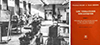 |
Figure 1. Left: first practical works on vibrations, installed in the 60’s in the premises of the current LVA. Right: book written by Francisque Salles and Claude Lesueur in 1972. |
In 1972, Francisque Salles and Claude Lesueur co-authored a book dedicated to structural vibrations entitled Les Vibrations Mécaniques [1], based on the course given at that time at INSA Lyon. The book was prefaced by the Rector Jean Capelle, who was the creator and first director of INSA Lyon in the late 1950s. A first list of publications of what was called the Laboratoire de Vibrations is available in this book – the first publication dating from 1969. It is noteworthy that Claude Lesueur, who defended his PhD in 1970, wrote in the foreword that the work was conducted at the Laboratoire de Vibrations et d’Acoustique de l’INSA de Lyon.
A small team was then formed to tackle the problem of vibrations in academic structures such as beams, plates, and cylindrical shells, as well as in industrial systems. This team was joined by colleagues from INSA, who were pioneers in utilizing computational methods for structural vibration analysis. Notably, Claude Boisson, a freshly graduated engineer from INSA, defended his PhD in 1969, also under the supervision of Francisque Salles.
Very soon, Claude Lesueur directed and oriented the emerging research team towards industrial acoustics, especially since 1974 when the laboratory became a research unit of INSA Lyon (LVA for Laboratoire Vibrations Acoustique), thereby complementing academic research in acoustics in Lyon.
The first international publications in the field of acoustics date back to the PhD thesis of Jean-Louis Guyader in the late 1970s, which focused on the modelling of acoustic transmission through multilayered plates, and was published in the Journal of Sound and Vibration [2–4]. A picture of Claude Lesueur talking to Jean-Louis Guyader taken at that time is shown in Figure 2.
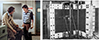 |
Figure 2. Left picture: Claude Lesueur (left) and Jean-Louis Guyader (right) in the late 70’s. Right picture: experimental setup of the two thin plates coupled in L-shape [5]. |
First works on energy-based modelling of the vibratory coupling between structures were carried out in the early 1980s and published in the same journal [5, 6], with application to L-shaped coupled plates (an experimental setup is shown in Fig. 2).
Several PhD theses were then carried out at the LVA. One can cite the arrival of Nacer Hamzaoui in 1980, first as an assistant, then as a PhD student working on the development of acoustic intensity. After defending his thesis in 1984, he developed his expertise in the use of machine vibrations for monitoring and diagnosis at the University of Algiers. He returned to the LVA in the late 1980s, as a researcher and then an Assistant Professor, to develop this new axis of research.
The know-how and skills acquired by the laboratory in theoretical and industrial vibroacoustics led to the publication in 1988 of a book entitled Rayonnement acoustique des structures [7] (cover page in Fig. 3, left), written by a group of experts in the field under the coordination of Claude Lesueur. This book was unique in that it covered a very wide range of issues related to vibration and acoustics, from the fundamental mathematical formalisms describing the phenomena of acoustic radiation to descriptions of practical experimental methodologies, such as intensimetry and acoustic arrays, not forgetting the vibrations of continuous structures – one of the first books in French dedicated to the discipline in the nascent years of NVH engineering.
 |
Figure 3. Left: book directed by Claude Lesueur, published in 1988 (Ed. Eyrolles). Center and right: Jean-Louis Guyader’s book, published in 2002 (Ed. Hermès Sciences/Lavoisier), and its 2006 english edition (Ed. ISTE Ltd). |
In 1990, after returning from a sabbatical year in Canada, Jean-Louis Guyader became the director of the LVA. He continued to develop research activities in acoustic radiation of structures and initiated new ones, such as acoustic perception. In 1992, the LVA was extended with a large hall containing a workshop and a 420 m3 reverberation room. Jean-Louis Guyader was responsible for the course on “Vibration of Continuous Media” offered to Mechanical Engineering students, which ultimately became a book published in 2002 [8] in French (an English version was released a few years later [9]), see cover pages in Figure 3, center and right.
Claude Lesueur moved to Nevers in the mid-1990s to establish an acoustics laboratory at a newly founded engineering school dedicated to automotive engineering (ISAT – Institut Supérieur de l’Automobile et de Transports), where he would conclude a productive career.
The LVA then welcomed Goran Pavic, a well-known and experienced colleague working in the field of industrial acoustics. While pursuing a productive research activity, he took the lead on actions such as setting up European projects and organizing the international congress NOVEM, whose first edition took place in Lyon in 2000. After twenty-five years of activity, NOVEM counts 8 conferences in the series which have taken place all over the world: Lyon 2000 (France), St-Raphaël 2005 (France), Oxford 2009 (UK), Sorrento 2012 (Italy), Dubrovnik 2015 (Croatia), Ibiza 2018 (Spain), Auckland 2023 (New Zealand), Garmisch-Partenkirchen 2025 (Germany). And the series continues. Goran Pavic’s wish was to create a small event (around 120 to 150 participants) to promote high-quality scientific exchanges while ensuring a convivial atmosphere.
At the beginning of the 2000s, Etienne Parizet, coming from the industry, joined the team as a Professor to strengthen the research theme of acoustic perception. At that time, automotive acoustics was a major application area for the lab. On the initiative of Bernard Laulagnet, a former PhD student and then Assistant Professor at the LVA, several acoustic engine rigs were established on the thermal engine platform of the Mechanical Engineering Department of INSA Lyon. Several industrial studies and PhD theses were conducted on engine noise in the 2000s. These activities led to a second extension of the lab in the 2010s, with the construction of a new building dedicated to engine test rigs (see Fig. 4), with a large semi-anechoic chamber with an 80 Hz cutoff frequency. In the early 2010s, Jérôme Antoni, a professor at UTC Compiègne, joined the LVA team, strongly reinforcing research activities in acoustic array processing and diagnostics of rotating machines.
 |
Figure 4. Exterior view of the laboratory and its main current testing means, and of the teaching Mechanical Department (GM) behind. |
A few years later, LVA workforce increased again with the arrival of four researchers in the field of Non-Destructive Testing (NDT), utilizing technologies such as ultrasounds and X-rays. This expansion extended the monitoring and diagnostics research axis towards structural health monitoring and control.
In 2010, Etienne Parizet and Daniel Juvé (from the Laboratoire de Mécanique des Fluides et d’Acoustique, also in Lyon) were behind the creation of the Centre Lyonnais d’Acoustique (CeLyA). This center gathers more than one hundred researchers active in this field across various universities and engineering schools in Lyon and Saint-Etienne. The quality of the consortium was recognized by the French government, which designated CeLyA as a “Laboratory of Excellence", enabling it to receive substantial funding (around 9 million euros) between 2011 and 2027.
Jérôme Antoni has been the director of the LVA since 2021. The internal premises of the laboratory have undergone renovations, including the practical work platforms in the basement, which now comply with all necessary safety and accessibility standards.
The LVA is one of the oldest research units at INSA Lyon, perhaps the only one that has not changed its name since its creation! This consistency underscores the relevance of the unit’s focus, which encompasses both structural vibrations and acoustic radiation.
Over the years, the LVA has gained international renown, notably through several strong collaborations with foreign universities, too numerous to be all cited here. We may at least mention partneships formalized through joint theses, with KU Leuven, VU Brussels and UNSW Sydney in the domain of condition monitoring of rotating machines, ETS Montreal (structural health monitoring), UdS Sherbrooke (flow-induced noise, inverse methods), UT Sydney (underwater vibroacoustics), URL Barcelona (acoustic black holes), USTHB in Algiers and University of Guelma (diagnostics of rotating machines). One may also mention international joint laboratories build in the recent years, a first one with UNSW Sidney about machine condition monitoring, and the IRP (International Research Project) named Centre Acoustique Jacques Cartier with the CRASH (Centre de Recherche Acoustique-Signal-Humain) of the university of Sherbrooke in Quebec, Canada. The Sherbrooke-Lyon Research Training Program in Acoustics (Programme Samuel de Champlain) recently brought together teaching teams from both universities, notably through joint courses integrated into the graduate programs of the two institutions.
The LVA is composed of researchers who also devote 50% of their time to teaching. The teaching activities have predominantly taken place at the Department of Mechanical Engineering of INSA Lyon, where its premises are also located. Several members of the lab have notably directed this department, including Claude Boisson in the 2000s, followed by Nacer Hamzaoui in the 2010s. From the outset, this has been a structuring factor contributing to the laboratory’s identity and cohesion. Since the 1980s, fifteen to twenty students per year have been trained in noise and vibration issues during their final academic semester, establishing INSA Lyon as one of the major French training centers for NVH Engineering.
More than 160 students have prepared their PhDs at the LVA since its creation, with the frequency following an increasing trend: one per year in the 1980s, two per year in the 1990s, three per year in the 2000s, and five to ten per year since the 2010s. The proportion of graduated PhDs pursuing a career at the university shows an opposing trend. From nearly 50% before 1990, the proportion fell to 30% in the 1990s and 2000s. Since 2010, a large majority (more than 95%) of graduated PhDs have chosen an industrial career. The LVA theses are too numerous to be all referenced in this paper. The complete list of PhD theses is available on the HAL webpage of the laboratory: https://insa-lyon.hal.science/LVA.
The LVA is a relatively small research entity compared to the standard size of French research laboratories, with currently 13 permanent researcher positions in 2025. Since the 1990s, the laboratory has been organized around four axes of research to which everyone is free to contribute. The rest of the paper is therefore logically structured into four sections dedicated to each of these axes:
-
Section 2: Vibro-acoustic modelling (on understanding and predicting the mechanisms of vibration propagation and acoustic radiation).
-
Section 3: Inverse methods and source identification (on the use of measured data to infer the properties and parameters underlying noise-generating mechanisms).
-
Section 4: Acoustic and vibration perception (on the measurement of quantities relating to human perception of noise and vibration).
-
Section 5: Monitoring, diagnosis, and non-destructive testing (on the estimation of the state of health of machines and structures using vibration, acoustic, ultrasonic or X-ray data).
2 Vibro-acoustic modelling
2.1 Modelling of multi-layered panels
The first international publications of the officially named Laboratoire Vibrations Acoustique result from the PhD thesis of Jean-Louis Guyader, which was defended in 1977 under the supervision of Claude Lesueur. In these three milestone publications [2–4], the equations of motion for multilayered plates were established using a variational displacement formulation. Expressions for the transmission loss of viscoelastic orthotropic multilayered plates were presented, based on a combination of statistical and deterministic approaches, for both oblique plane wave excitation and reverberant sound excitations. Theoretical-experimental comparisons were provided for several orthotropic composite plates, which at the time were sufficiently rare in the vibro-acoustic community to warrant attention. Reproduction of typical results published in [4] is given here in Figure 5.
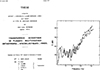 |
Figure 5. Left: cover page of the PhD thesis of Jean-Louis Guyader. Right: example of theoretical-experimental comparisons obtained for composite panels using the analytical methodology developed in [4] (here transmission loss of a steel/fiber glass composite/steel three-layer plate under reverberant sound excitation). |
A few years later, between the 1990s and 2000s, with the aim of transferring the laboratory’s academic research to the industrial sector through INSAVALOR1, the laboratory developed several software products (in Fortran and C++ programming language) with the help of Christian Cacciolati, Assistant Professor at the lab: PlaqueX (vibroacoustic modelling of viscoelastic multilayer plates), Isac (Acoustic transparency of infinite orthotropic multilayered plane walls), Movisand and Shell Layers (equivalent homogenisation of multilayered plates and shells respectively). A practical application of the vibro-acoustic analytical modelling consisted of homogenising the composite structures by introducing the concept of equivalent single layer thin plate with frequency-dependent equivalent complex bending stiffness, in order to simplify and accelerate finite element calculations.
Examples of results obtained through an industrial collaboration with Actran FFT2 and ArcelorMittal were made public during two INTER-NOISE congresses: 2007 in Istanbul [10] and 2008 in Shangai [11]. Figure 6 illustrates the advantages of analytical multilayer homogenisation, which yields results comparable to those obtained from 3D FEM calculations while significantly reducing the computational burden. This approach enables the use of standard FEM software more efficiently. For example, for the steel-PVB calculations illustrated here, the equivalent 2D FEM required only 17 000 degrees of freedom compared to 130 000 for 3D FEM.
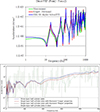 |
Figure 6. Example of results published in [10, 11], using the equivalent homogenized theory developed by Jean-Louis Guyader in his 1977 PhD thesis. Top: experimental/FEM/equivalent comparison of input impedance of a multilayer steel-polymer-steel plate from ArcelorMittal [10]. Bottom: comparison between three-layer FEM and equivalent single-layer FEM of the transverse acceleration at the excited point of a cylindrical sandwich shell (ArcelorMittal Sollight AC steel-polymer-steel) [11]. |
More recently, the equivalent thin plate homogenisation methodology (referred now in the community as the Guyader’s model) was extended to model anisotropic laminated plates with arbitrary orthotropic angle per layer [12]. The procedure was validated experimentally through broadband identification of several multi-layered composite structures [13], including precise damping characterisations [14]. The approach continues to be studied and an extension has been recently proposed to handle multilayered structures with imperfect interfaces [15, 16].
2.2 Modelling cylindrical shells: from Concorde to submarines
Around the 1980s, the LVA became interested in the acoustic transparency of stiffened cylindrical shells, due to their significant aeronautical applications. The laboratory received a full-scale section of the Concorde, on which acoustic transparency measurements were conducted and compared with numerical predictions derived from models of infinite stiffened cylindrical shells (stringers and framed). At that time, numerical developments employing the finite element concept were not efficient, necessitating reliance on analytical methods. Operators for cylindrical shells of the Donnell, Mushtari and Flügge types were utilized, yielding satisfactory results regarding vibration predictions. The fluid was assumed to be light (i.e. air at rest). The stiffeners were treated as beams and were assumed to remain undeformable in their cross-section, which imposed limitations in terms of the frequency range, particularly for transparency, which necessitates frequencies above 1 kHz.
Following these investigations into the acoustic transparency of stiffened shells, the question of acoustic radiation from stiffened cylindrical shells in heavy fluid arose for acoustic stealth applications on submarines. Models of thin Donnell-type cylindrical shells, stiffened, were coupled to a heavy fluid, requiring a fine description of the fluid-structure coupling [17]. At the time, measurement results were hard to come by, and one had to rely on numerical simulations of analytical models. Nevertheless, the LVA learned a lot from them, and the notion of mass added by the fluid became familiar. In the following, the shells were considered to be finite. The acoustic radiation impedances of cylindrical shells were obtained considering that the shell is baffled (i.e. extended by rigid cylinders) and that it is simply supported at the ends. This permitted simplification of the numerical resolution as counterparts of the radiation impedances of baffled supported plates. The couplings between the shell modes were examined in detail. It was concluded that, even in heavy fluids, they could be neglected [18]. Only the direct radiation impedances of the modes were sufficient to obtain an accurate result. The numerical calculations were still substantial – yet far less demanding than those of FEMs, which would take off with the increasing power of computers in the 90s. Figure 7 shows a comparison of acoustic radiation obtained from a calculation of a submerged cylinder with a numerical model dating from 1990, and measured on the corresponding mock-up for the US Navy in 1971. The comparison was considered to be quite satisfactory and gives an idea of the demands made on the accuracy of the predictions in the 1980s.
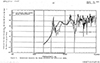 |
Figure 7. Comparison of theory and experiment of acoustic radiation from an immersed cylinder in the far field: bold line LVA simulation 1990, thin line American measurement 1971. |
As the years went by, computational tools became increasingly powerful, enabling the development of more complex models. A hybrid numerical model was then developed to predict the vibroacoustic behavior of submerged cylindrical shells stiffened by axisymmetric internal structures (such as ring stiffeners, bulkheads, etc.) [19]. It is based on the coupling of a spectral approach, to describe analytically the cylindrical shell in water, and FEMs of the internal structures. This model permits the representation of the pressure hull of a submarine vehicle, taking into account the different spacing of the internal structures depending on the compartments, while at the same time accurately modelling the dynamic behavior of the internal structures over a wide frequency range (i.e. up to several kHz) (see Fig. 8). In particular, this model has been used to study Bragg and Bloch-Floquet scattering of stiffened shells [20], and to predict radiated noise when the shell is excited by a turbulent boundary layer [21].
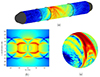 |
Figure 8. Example of results obtained with a hybrid FEM-spectral approach for modeling a fluid loaded cylindrical shell coupled to internal frames in the mid-frequency range: (a) vibratory field on the cylindrical shell; (b) spectral decomposition of the vibration field; (c) radiated pressure in the far field. Results for a harmonic radial point force on the shell at 1 kHz [19, 20]. |
In addition, non-axisymmetric structures modelled by 3D finite elements were integrated into this model based on the CTF (Condensed Transfer Functions) approach [22], an extension of the PTF (Patch Transfer Functions) approach developed originally in the laboratory for the automotive industry [23, 24] and based on the division of a vibroacoustic system into subdomains coupled by their acoustic impedances. Coatings were then introduced into the modelling using multilayer cylindrical models with transverse isotropic or orthotropic behavior [25]. A numerically stable method was proposed for modelling a fluid-loaded multilayered cylindrical shell excited by a plane wave, which addresses the fluid instability problem typically encountered when using the well-known transfer matrix method (TMM). The prediction of the pressure field scattered from an immersed cylindrical shell partially coated with soft rubber is considered. As the coating covers only a partial portion along the circumference of the shell, the considered system is not axisymmetric. To circumvent this issue, the reverse Condensed Transfer Function (rCTF) method has been developed to decouple vibroacoustic subsystems initially coupled along lines or surfaces [26].
2.3 Energy methods
In the early 1980s, the LVA began investigating medium- and high-frequency vibroacoustic modelling methods based on energy concepts. A first theoretical method for studying vibrational energy transmission in coupled structures was then initiated [6]. This method was based on the knowledge of the global modes of the coupled structure. General expressions were obtained for the exchange of energy between different subsystems. The important practical case of coupled plates forming an L, T, or cross junction was then investigated using the proposed model, and the theoretical results were compared to measurements [5] as shown in Figure 2. Different original approaches were then proposed and investigated, considering energy quantities averaged locally: the analogy with heat equations, or the concept of energy mobilities [27].
The role of damping with respect to energy and energy flow in vibrating mechanical systems was investigated with the aim of establishing some general relationships. The link between the energy flow and the system energy was considered from both the local and global points of view [28, 29].
Subsequent research work focused on developments linked to the SEA (Statistical Energy Analysis) method, an approach proposed in the 1960s by a team from BBN Inc. in the USA (Lyon and Dejong, Maidanik, Ungar…) and still the most widely used in the industry for high-frequency vibroacoustic predictions.
The LVA then focused on three aspects of the method. (1) The hypothesis of weak coupling between the SEA subsystems, not easy to understand for the uninitiated user. An automatic substructuring approach to detect SEA subsystems was proposed [30]. (2) The hypothesis of modal energy equipartition, which is only statistically valid at high frequencies where modal density is very high. This assumption has been relaxed to derive the SmEdA (Statistical modal Energy distribution Analysis) model, which describes vibrational energy transfers in the mid-range frequencies [31]. (3) The estimation of loss factors by SEA coupling for subsystems with complex geometries [32, 33]. An approach derived from the SmEdA model was proposed to deduce the SEA coupling loss factors from the eigenmodes of the uncoupled subsystems, which can be extracted using a finite element code [32, 33]. This work led to numerous applications for the automotive (see Fig. 9), aerospace and energy industries [35]. Extensions of SmEdA were then developed to describe the variations of the local energy into each subsystem [36] and to represent the non-resonant transmission between panels [37, 38], whereas SEA is generally devoted to describe only the resonant transmission and the total energy of each subsystem. This approach has also been extended to consider complex heterogeneous subsystems with dissipative materials in the context of vibro-acoustic modelling of a trimmed truck cab [39, 40]. Recently, SmEdA has been used to investigate the transmission loss of panels with multiple embedded acoustic black holes [41].
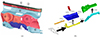 |
Figure 9. Illustration of SmEdA [31] partitioning for predicting energy sharing between subsystems of an automotive: (a) firewall [34]; (b) floor. |
Since 2010, works on this topic have been carried out in collaboration with a team from LTDS (Laboratoire de tribologie et dynamique des systèmes) at École Centrale de Lyon.
In the framework of this collaboration, the diffuse field hypothesis underlying the various hypotheses attributed to the SEA has been studied in depth [42]. Diagrams characterizing the homogeneity of the vibration field as a function of mean free path and damping were produced for different panels with and without ergodicity characteristics [43]. The SEA validity could then be directly related to compliance with the diffuse field hypothesis. In recent years, hybrid models have been developed: on the one hand, between the SEA method and the SmEdA method [44], which can be used to describe subsystems with low modal density (using SmEdA) and subsystems that respect the diffuse field hypothesis (using SEA); on the other hand, between the SEA method and the radiative transfer method, to describe subsystems that are strongly damped by the latter [45].
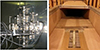 |
Figure 10. Left: FAT microflown antenna of acoustic velocity sensors used for instantaneous non-contact measurements [48]. Right: linear FAT parietal antenna designed for TBL denoising [49]. |
3 Inverse methods and source identification
In vibration and acoustics, the modelling of the studied systems is of prime interest in order to understand the main governing phenomena and the associated frequency ranges. Modelling a system to obtain predictions of its response is sometimes referred to as a direct problem. Experimentation is primarily used to validate modelling, but can also be employed more blindly to identify, quantify, or map unknowns such as forces or system parameters. These approaches are called inverse methods – as opposed to direct ones – on which the LVA began to work in the early 1990s. This section reports on three main topics: the RIFF/FAT technique (Résolution Inverse Filtrée Fenêtrée/Force Analysis Technique), the Inverse Patch Transfer Function method, and the development of acoustic array processing methods.
3.1 The RIFF technique
The RIFF technique was developed in the early 1990s during the PhD of Charles Pézerat, directed by Jean-Louis Guyader [46]. The basic idea was to use a simple analytic formulation of the equilibrium equation of a structure to assess the right-hand side (the forcing function) from a local measurement of the vibration field. Spatial derivatives of the vibration field are assessed through finite differences. The main feature of the technique is that it enables any piece of structure, with local behavior similar to a beam or a plate, to function as a virtual force sensor. The RIFF technique has been continuously developed and improved ever since, aided by the development of measurement tools for vibration fields, such as scanning laser Doppler vibrometry. One can cite extensions to plates, cylinders or finite elements, or the adaptation to the identification at boundaries. The analysis of the low-pass properties of the approach in the wavenumber domain opened the door to applications in aero/hydroacoustics, where the structure (hull, windscreen) can be used as a sensor to identify low wavenumber components of the turbulent boundary layer (TBL) [47]. Two examples of applications of the technique are given in Figure 10, using an array of acoustic velocity sensors (left), or an array of accelerometers for TBL denoising in wind tunnel tests.
A correction of the original formulation is proposed in 2012 [50], limiting the bias introduced by the use of finite difference schemes at low spatial resolution, thus strongly enlarging the high-frequency use of the technique. Originally conceived for force localisation issues, the Corrected Force Analysis Technique (CFAT) has evolved towards identification and mapping of structural parameters [51], with application to the dynamic characterisation of complex structures such as composite structures [52], or architectured panels [53]. Examples of identified structural parameters with CFAT methodology are given in Figure 11 for an aluminum plate with added adhesive patch (spatial view of real and imaginary part) and for a honeycomb sandwich panel (equivalent bending stiffnesses plotted on a wide frequency band).
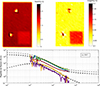 |
Figure 11. Upper: map of real and imaginary parts of the structural parameter of an aluminum plate with an added patch of adhesive damping material identified with CFAT [51]. Lower: equivalent flexural rigidities (D i j ) of an anisotropic honeycomb sandwich panel identified with CFAT on wide frequency band D 11 ([rgb]0, 0.45, 0.74 –), D 22 ([rgb]0.67, 0.08, 0.18 –), D 12 ([rgb]0.47, 0.67, 0.19 –), D 16 ([rgb]0.93, 0.69, 0.13 –), D 26 ([rgb]0.49, 0.18, 0.56 –), compared to predicted values (equivalent homogeneous thin plate model) in dashed lines [52]. |
Recently, the systematic comparison of the performances of CFAT and another inverse technique, the Virtual Field Method (VFM), has been studied in collaboration with CRASH-UdeS (Université de Sherbrooke) [54]. A frequency-averaged VFM has been developed and validated for beams and plates [55], both numerically and experimentally, through measurements performed using optical deflectometry.
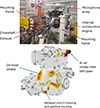 |
Figure 12. Example of intensity map reconstructed with iPTF on the skin surface of an internal combustion engine on a test bench at 3000 rpm, full load, using only pressure measurements. Top: experimental setup showing that mounting frames were not masked during measurements; Bottom: localisation of areas of high acoustic intensity [61]. |
3.2 Inverse Patch Transfer Function method
The concept of mobility or acoustic impedance has been widely used in vibro-acoustic modelling at the LVA to solve complex systems by dividing them into simpler subdomains coupled by mobilities or surface impedances. One can cite the modelling and characterisation of airborne noise sources [56, 57], the energy mobility methods [27] and the patch transfer function (PTF) approach [23, 24] further extended to the Condensed Transfer Function approach already mentioned in Section 2.2. This framework was the basis of a newly developed acoustic inverse method: the inverse Patch Transfer Function (iPTF) method.
The iPTF approach is based on the concept of a virtual acoustic volume defined arbitrarily around a source with a complex shape and aims at reconstructing the acoustic fields (pressure, velocity, intensity) directly on the surface of the system under study [58, 59]. At this stage, the use of pU probes was essential to measure the radiated field on the virtual surface surrounding the source. The model relied on the decomposition of the pressure field through eigenvectors derived from FEMs, simultaneously imposing certain (non-physical) rigid boundaries on the virtual acoustic volume.
The methodology has been further developed to facilitate its industrialisation within the automotive application domain [60]. To this end, a new version of the method has been developed that does not require measurement of air particle velocity. Application to a realistic case of an internal combustion engine on a test bench yielded very satisfactory results in terms of locating areas of high acoustic intensity directly on the engine geometry, as can be seen in Figure 12.
The iPTF was then developed to demonstrate its ability to handle the presence of rigid masking objects located in the virtual acoustic volume or passing through it, like mounting frames. The key point is the use of a finite element mesh with an empty acoustic footprint with Neumann’s boundary condition [62].
The iPTF approach has also been utilized as a framework to develop additional methodologies, to characterize experimentally the surface impedance of a subdomain without decoupling it from the whole system [63] or the Selective Structural Source Identification, which is an attempt to translate iPTF to structures [64].
3.3 Microphone array processing
The emergence of acoustic imaging tools for engineering applications dates back to the 1970s, with the seminal work of Billingley and Kins3 and Williams et al.4. The company Metravib-RDS, based in Lyon, began investigating these techniques in the early 1980s. One of the very first CIFRE thesis (Convention industrielle de formation par la recherche) was established at that time, in partnership with the LVA, under the direction of Claude Lesueur (Laurence Martel, 1985). Note that Bernard Beguet, who would later found the company MicrodB, was part of the supervising team.
The LVA began to work on its own on the post-processing of microphone arrays much later, in the 2000’s, in the frame of the development of a microphone array dedicated to automotive engine tests. Initial works focused on the formulation of inverse methods trying to take advantage of existing techniques. The critical step of the proposed approaches was about regularisation, with several papers published on this topic [65, 66]. For example, an important step forward as compared to state of the art techniques is introduced in [67], with Bayesian regularisation. Bayesian approaches opened the door to several developments thanks to its versatility in taking into account a priori information. In the 2010s, LVA focused on aeronautic applications of acoustic array processing, with the creation in 2014 of a dedicated joint laboratory in partnership with the Acoustic Center of the LMFA (Laboratoire de Mécanique des Fluides et d’Acoustique) and the company MicrodB. Several topics have been explored, such as ducted acoustic array processing [68], turbulent boundary layer analysis [69], sparse acoustic imaging [70], or moving source focusing [71]. In this context, the LVA achieved notable results as compared with major international actors like the DLR (German Aerospace Center) or NASA [72, 73].
The LVA is actively engaged in this topic, supported by long-term partnerships with companies such as MicrodB and Airbus. This involvement includes the supervision of multiple PhD theses, in addition to participation in national and European collaborative projects over the past 15 years (see some microphone array processing results in Fig. 13).
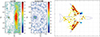 |
Figure 13. Left: analysis of an acoustic field contaminated by a TBL [69]. Right: acoustic source map identified from a flyover test with the CLEANT method, with a separation of broadband (red) and tonal (blue) sources [74]. |
4 Acoustic and vibration perception
This activity was initiated by Nacer Hamzaoui at the end of the last century. The lab already had a strong reputation in the area of structure-borne noise. The idea was to go a step further and evaluate how this noise is perceived by listeners. Since then, activities have mainly focused on three themes.
4.1 Assessment of sound quality and discomfort (acoustic or vibratory)
The aim here is to identify the sound dimensions contributing to the assessment of the sound quality of industrial objects, or to discomfort due to noise or vibration. Applications have been many and varied: the sound of a car door closing [75], of tapping on a dashboard [76], of the impact between a ball and a tennis racket… In all cases, the user of the product utilizes noise (among other percepts) to form an image of the object’s quality. The aim of our research is to build signal indicators that can predict this perceived quality, based on measurements taken according to a simple protocol. This research is based on perceptual experiments in which participants listen to noises and answer a variety of questions. These experiments take place in the laboratory, where a large soundproof booth can be used. Numerous procedures exist for conducting such perceptual experiments; more fundamental studies have also been carried out to assess the accuracy or cost (in terms of time spent) of such procedures [77, 78]. Similar approaches can be used to assess the annoyance (or unpleasantness) of noises (e.g. noise in a high-speed train [79], or noise emitted from delivery trucks [80]). A particularity of the laboratory has been to apply these approaches to vibratory stimuli. In the early 2000s, as part of a study for Hutchinson-Paulstra, a vibration bench was designed and built at the LVA. Simple in design, it subjects a participant, seated on a car or aircraft seat, to controlled vertical vibrations (Fig. 14). As the actuator is an electrodynamic shaker, its noise level is low enough (unlike more common devices such as hydraulic actuators) that controlled acoustic stimuli can also be presented to the participant. In an early version, vibrations from the steering wheel were also reproduced. This makes it possible to study interactions between acoustic and vibratory stimuli (which, in many transportation applications, come from common sources such as engines). The device has been used in a number of applications: cars, helicopters, and aircraft. As an example, this allowed us to propose an improvement of the well-known ISO 2631 standard, which aims at evaluating human exposure to whole-body vibration. As some amplitude modulations can occur in helicopters, the improvement consists of taking the modulations into account in the computation of the exposure – which enhances the accuracy of the evaluation made by the standard [82]. The case of annoyance for railway track residents has also been considered (work done during a thesis also supervised by Catherine Marquis-Favre from ENTPE [83, 84]).
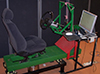 |
Figure 14. Test bench for the evaluation of vibration uncomfort [81]. |
4.2 Noise computation for a realistic auralisation
The main question is the following one: how accurate should a noise computation be for the synthesized sounds to be used in a perceptual experiment? While current numerical models are not precise enough to produce sounds that cannot be differentiated from real sounds, the question concerns the cues that are the most important for perception. How can the computation accuracy be defined to reach that goal? In other words, what should be relevant for practitioners? If sounds corresponding to different definitions of the product are computed, can they be used in a perceptual experiment to select the best configuration? This has been evaluated in some practical examples. For instance, the LVA contributed to the perceptual evaluation of the relevance of certain structural parameters (thickness, boundary conditions, damping, materials, etc.) in order to refine the sound prediction of vibrating plates and a closed cavity. It was then possible to optimize the analysis parameters (frequency step, frequency range, number of modes, time step, etc.) of an acoustic radiation calculation code using a sound perception approach [85]. It was also shown that a SEA-based computation can be used to predict the influence of glazing configurations on the unpleasantness of noise in the cabin (Fig. 15, taken from [86]). In the case of outside noise propagation, it was verified to which extent the simplification of a FEM model could modify the perception of the exterior noise of a tire [87]. Current work focuses on the ability of computational approaches to evaluate the influence of electric motor control strategies (Pulse Width Modulation) on motor noise annoyance.
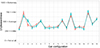 |
Figure 15. Unpleasantness of noise in a car cabin (source = loudspeaker outside the car). Orange curve: measurements; blue curve: simulation [86]. |
4.3 Noise annoyance in open plan offices
Since 2014, the laboratory has been collaborating on this subject with the acoustics team at INRS (Institut National de Recherche et de sécurité) in Nancy, headed by Patrick Chevret. The situation in open-plan offices is original: although the noise level is well below regulatory limits, the occupants complain about the noise. This is due to the nature of the occupants’ tasks (which may require cognitive effort) and to the noise (mainly composed of discussions by other occupants). In fact, the surveys show that these conversations from neighbors are described as the main source of annoyance. In the course of this research, a questionnaire was developed to better apprehend the perception of their work environment by open plan offices occupants [88]. This questionnaire is now part of a standard (NF S 31-199) and is used by companies carrying out office refurbishing (to verify the effect of these modifications). Beside this questionnaire to be used on-site, several theses have been devoted to laboratory experiments. The aim of these experiments is to measure the annoyance of a more or less intelligible speech signal on people having to perform intellectual tasks. With the help of an ergonomist (Edith Galy, professor at the University of Nice), an original task was devised (participants have to analyze newspaper extracts and to produce a press review). After a fairly long exposure (up to a day), questionnaires are used to estimate their fatigue and the load they felt. Conversations (with a controlled intelligibility) are broadcast throughout the session. This makes it possible to estimate the disruptive effect of these conversations. As an example, Figure 16 shows the detrimental effect of intelligible speech on fatigue felt by participants during a day. Speech (green curve) creates more fatigue than stationary noise or speech-modulated noise, for a similar sound pressure level. Collaboration with INRS, an organisation in direct contact with companies specializing in acoustics, facilitates the rapid transposition of recommendations and research results into concrete applications.
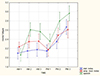 |
Figure 16. Mental fatigue felt by participants during the day. This is measured through questionnaires filled at three times in the morning (AM 1 to AM 3) and three times in the afternoon (PM 1 to PM 3) [89]. |
5 Monitoring, diagnosis, and non-destructive testing
5.1 Monitoring and diagnostics of rotating machines
As the LVA emerged in the late 1960s in the mechanical engineering department of INSA Lyon, the study of the dynamic behavior of rotating shafts became one of the early research topics. Claude Boisson focused on the modal analysis of shafts during his PhD thesis (1969), and later, Christian Cacciolatti (1976) investigated the effect of rolling bearing supports on the shaft’s vibration modes (see pictures taken from the PhD thesis, Fig. 17).
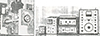 |
Figure 17. Pictures taken from the PhD thesis of Christian Cacciolati (1976). Left: bench for the dynamic analysis of the shaft supported by rolling bearings. Right: measurement system. |
In the 1980s, the possibility of using vibrations to detect mechanical faults gave rise to a new research area related to maintenance issues: vibration-based condition monitoring. In 1989, in collaboration with INRS, Campagna & Ind and Vibratec, N. Hamzaoui conducted a research project on a test bench (Fig. 18) dedicated to the detection of simulated mechanical defects using acoustic and vibration sensors and to the extraction of a spatial and frequency sorting criterion for diagnosis [90, 91].
 |
Figure 18. Bench dedicated to the study of the noise and vibrations generated by rotating machines (1990). |
With the current perspective, it appears that the LVA has continuously marked this research domain by proposing new ideas, of which several have led to implementation in the industry. Advanced signal processing and machine learning were correctly identified as essential methodologies to complement physical approaches in building the discipline currently known as “machine health monitoring” (MHM). This is reflected in some early papers, which clearly showed this direction [92, 93]. The LVA has strongly advocated this approach since then, through numerous publications and on the occasion of several academic and industrial collaborations.
In particular, the LVA has contributed to demonstrating the benefit of conducting MHM in the “angular domain”, rather than in the “time domain”, where the angle of rotation of the mechanical part to be monitored provides the proper reference frame [94–96]. This comes with the elaboration of a rich theoretical framework to describe the nonstationary signals produced by rotating machines, embodied by the theory of cyclostationary processes and its generalisation to fuzzy [97] and angle-time cyclostationarity [98], and the development of dedicated data and signal processing tools. By way of an example, the “fast spectral correlation” jointly analyses the spectral content of carriers and modulations in a signal, in a computational time that offers a breakthrough in industrial applications [99].
Closely related to this topic is the measurement of instantaneous angular speed (IAS), a fundamental quantity that links the time and angular domains [100]. In addition to the investigation of specific instrumentation to measure it [101], the LVA has developed virtual sensing solutions apt to estimate the IAS directly from the vibration signals. Initially conceived to rank the results to a data challenge, the MOPA algorithm has become a reference in the scientific domain against which new algorithms are systematically compared [102, 103].
In addition to the aforementioned subjects, other contributions of the LVA to MHM include the exploration of acoustical perception [104, 105] and acoustic imaging [106] to the detection and diagnosis of faults (see Fig. 19). This illustrates well the characteristic of the LVA to propose global solutions that involve both the measurement design and the processing steps, all strongly rooted in physical principles.
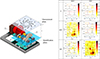 |
Figure 19. Left: experimental apparentus showing a microphone array in the “measurement plane” used to sense the acoustical field radiated by a rotating machine in a testbench. Right: spatial distribution of a cyclostationary indicator mapped to the “identification plane” and targetted to two types of bearing fault – outer (IRF) and inner (ORF) race faults in left and right columns, respectively – tested in healthy (first raw) and faulty cases (outer and inner race faults in second and third raws). Red spots indicate location of the faults though high values of the cyclostationary indicator [106]. |
5.2 Structural health monitoring and non-destructive testing
In 2012, the LVA welcomed four new researchers, who initiated the WATSON scientific project (“Wave-based Analysis Techniques for Structural Online monitoring and non-destructive Testing”). WATSON focuses on academic activities related to non-destructive testing (NDT) and addresses safety concerns and meet the demands of the industry, particularly in the context of Industry 4.0.
Today’s industry faces ever-greater challenges in achieving greater structural integrity and reliability, as well as improving safety and performance. In most cutting-edge industries, the issue of control has now become an integral part of the design process.
The relentless pursuit of quality and the need for extremely precise characterisation are posing increasingly difficult non-destructive testing (NDT) challenges across various fields, including security, energy, and transportation. Some of these challenges cannot be addressed with current technologies due to constraints. Thus, the development of new non-destructive evaluation techniques is crucial for enhancing the detectability inherent to any method.
NDT techniques based on ultrasound, eddy currents, X-rays, and infrared thermography have enriched the spectrum of LVA’s expertise in acoustics and vibrations.
The integration of the WATSON project within the LVA was accompanied by the use of existing scientific equipment, including those for ultrasound and acoustic imaging, as well as radiology facilities that are unique at the university level in France (see Fig. 20).
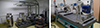 |
Figure 20. X-ray control and imaging system. |
Recently, as part of the RaNADyn (“Radiographie Numérique Augmentée et Dynamique") project funded by BPI France and in collaboration with Framatome, the LVA implemented and developed a model to account for the geometric blurring introduced by the size of X-ray sources. This work led to the patent [107] and enabled a paradigm shift towards the possibility of utilizing X-rays under conditions that have not previously been employed.
Another NDT activity concerns the automatic processing of images to detect and classify defects. In collaboration with the CETIM, the LVA conducted a study for the detection of defects in 3D tomographic images of castings, which was awarded the Ron Halmshaw Award by the British Institute of Non-Destructive Testing. The development of a two-stage methodology for segmentation and classification using deep learning led to the registration of a software package, currently supported by the AURA Region to be industrialised.
On the ultrasonic side, the LVA has acquired specialized skills and equipment dedicated to ultrasonic NDT, ultrasonic imaging, microscopy, as well as to the characterization of anisotropic and attenuating materials.
The LVA has been a partner in the ANR MUSCAD (“Méthodes ultrasonores pour la caractérisation de matériaux de composants nucléaires pour l’amélioration du Diagnostic”) project, responsible for developing reliable methods for characterising the complex elastic tensor of austenitic steels used in the welding of primary circuits in French nuclear power plants.
It has also been the French coordinator of the PYRAMID (“Piping sYstem, Risk management based on wAll thinning MonItoring and preDiction”) International Collaborative Research Project, bringing together French and Japanese partners, to develop non-contact NDT methods and systems (EMATs) for the detection and characterisation by guided waves of losses of thickness due to corrosion in the cooling circuits of the Fukushima Dai Ichi nuclear power plant.
As part of the Cigéo project (industrial geological disposal centre), it has been a partner in the SCCoDRa project (Suivi et Contrôle de la Corrosion des composants métalliques pour le stockage des Déchets Radioactifs) funded by the French National Radioactive Waste Management Agency (ANDRA), in charge of developing an innovative method of tomographic reconstruction of corrosion defects in the steels used as metal liners for certain long-lived intermediate-level radioactive waste (ILW-LL) packages, as well as the lining of storage cells for high-level radioactive waste (HLW) packages using ultrasonic guided waves [108].
A recent paper, co-authored by several members of the LVA, illustrates the benefit of combining the expertise existing at the LVA, such as in vibroacoustics and NDT [109]. The study integrates experimental X-ray techniques and vibroacoustic methods for the comprehensive analysis of a honeycomb sandwich panel. A simple homogenisation approach of the honeycomb core is proposed, enabling the prediction of its shear properties based on statistical data derived from its geometry. These properties are utilized to predict the dynamic behavior of the structure employing a multi-layer analytical model. Results are compared to Laser Doppler Vibrometer measurements, demonstrating a high level of agreement with the predictions derived from the X-ray analyses.
INSAVALOR is the research valorisation subsidiary of INSA created in 1988 with which the LVA has a strong and long-standing relationship.
The multilayer homogenisation procedure was implemented into Actran FFT (now HEXAGON) under the name of FEXLAYER.
The acoustic telescope, J. Sound Vib. 1976.
Nearfield Acoustical Holography, JASA 1980.
Acknowledgments
We would like to express our sincere gratitude to all members of the laboratory, past and present. In particular, to the four directors of the LVA – Claude Lesueur, Jean-Louis Guyader, Etienne Parizet, and Jérôme Antoni – for their dedication and significant scientific contributions. Our appreciation also goes to the former teacher-researchers who are not co-authors of this work: Claude Boisson and Bernard Guérin, whose untimely passing we deeply mourn, as well as Marceline Barbé, Maurice Gotteland, Christian Cacciolati, Alain Blaise, and Charles Pézerat, for their contributions to the laboratory. We warmly acknowledge the essential role of the administrative staff, without whom the laboratory’s daily operations would not have been possible: the late Corinne Lotto, Danielle Lesueur, Nathalie Micolas-Godoy, Nathalie Loriot, and Meriem Dahmani. We are equally grateful to the technical staff – Antoine Godoy, Céline Sandier, Daniel Renaud, Frédéric Godoy, Patrick Blachier, Julien Chatard, and Mohamed Tahraoui – for their invaluable support. Our heartfelt thanks go to the many contract lecturers, doctoral candidates, postdoctoral researchers, and master’s and engineering students who have contributed their time and efforts to the laboratory over the years. Though too numerous to name individually, their work has been instrumental. Finally, we are deeply thankful to all our academic and industrial partners for the trust they have placed in us. Our achievements are also a reflection of their support and collaboration. To all who have been part of this journey – thank you for contributing to these 50 remarkable years.
Conflicts of interest
The authors declare no conflict of interest in regards to this article.
Data availability statement
No new data were created or analysed in this study.
References
- F. Salles, C. Lesueur: Les vibrations mécaniques. Tome 1. Théories et applications de base à l’usage des écoles d’ingénieurs et de la maîtrise de mécanique. Masson, Paris, 1972. [Google Scholar]
- J.-L. Guyader, C. Lesueur: Acoustic transmission through orthotropic multilayered plates, part I: plate vibration modes. Journal of Sound and Vibration 58, 1 (1978) 51–68. [Google Scholar]
- J.-L. Guyader, C. Lesueur: Acoustic transmission through orthotropic multilayered plates, part II: transmission loss. Journal of Sound and Vibration 58, 1 (1978) 69–86. [CrossRef] [Google Scholar]
- J.-L. Guyader, C. Lesueur: Transmission of reverberant sound through orthotropic, viscoelastic multilayered plates. Journal of Sound and Vibration 70, 3 (1980) 319–332. [Google Scholar]
- C. Boisson, J.-L. Guyader, P. Millot, C. Lesueur: Energy transmission in finite coupled plates, part II: application to an L shaped structure. Journal of Sound and Vibration 81, 1 (1982) 93–105. [Google Scholar]
- J.-L. Guyader, C. Boisson, C. Lesueur: Energy transmission in finite coupled plates, part I: theory. Journal of Sound and Vibration 81, 1 (1982) 81–92. [Google Scholar]
- C. Lesueur: Rayonnement Acoustique DES Structures: Vibroacoustique, Interactions Fluide-Structure. Eyrolles, Paris, 1988. [Google Scholar]
- J.-L. Guyader: Vibrations des milieux continus. Lavoisier, Paris, 2002. [Google Scholar]
- J.-L. Guyader: Vibration in Continuous Media. ISTE Ltd, London, 2006. [Google Scholar]
- J.-L. Guyader, C. Cacciolati: Viscoelastic properties of single layer plate material equivalent to multi-layer composites plate, in: Inter-Noise, Istanbul, Turkey, 2007, pp. 1558–1567. [Google Scholar]
- J.-L. Guyader, C. Cacciolati, E. Guyader: Prediction of vibroacoustic behaviour of multilayered structures using equivalent bi-materials, in: Inter-Noise, Shanghai, China, 2008, pp. 317–324. [Google Scholar]
- F. Marchetti, K. Ege, Q. Leclère, N.B. Roozen: On the structural dynamics of laminated composite plates and sandwich structures; a new perspective on damping identification. Journal of Sound and Vibration 474 (2020) 115256. [CrossRef] [Google Scholar]
- F. Marchetti, N.B. Roozen, J. Segers, K. Ege, M. Kersemans, Q. Leclère: Experimental methodology to assess the dynamic equivalent stiffness properties of elliptical orthotropic plates. Journal of Sound and Vibration 495 (2021) 115897. [CrossRef] [Google Scholar]
- K. Ege, N.B. Roozen, Q. Leclère, R.G. Rinaldi: Assessment of the apparent bending stiffness and damping of multilayer plates; modelling and experiment. Journal of Sound and Vibration 426 (2018) 129–149. [CrossRef] [Google Scholar]
- N. Auquier, K. Ege, E. Gourdon: Equivalent dynamic model of multilayered structures with imperfect interfaces: application to a sandwich structured plate with sliding interfaces. Journal of Sound and Vibration 535 (2022) 117052. [CrossRef] [Google Scholar]
- N. Auquier, K. Ege, E. Gourdon: Imperfect interfaces characterization in a multilayered structure by means of an equivalent dynamic model. Acta Acustica 8 (2024) 78. [Google Scholar]
- B. Laulagnet, J.-L. Guyader: Sound radiation by finite cylindrical ring stiffened shells. Journal of Sound and Vibration 138, 2 (1990) 173–191. [Google Scholar]
- B. Laulagnet, J.-L. Guyader: Modal analysis of a shell’s acoustic radiation in light and heavy fluids. Journal of Sound and Vibration 131, 3 (1989) 397–415. [Google Scholar]
- L. Maxit, J.M. Ginoux: Sound radiated by a submerged irregularly ribbed shell: the circumferential admittance approach. Journal of the Acoustical Society of America 128 (2010) 137–151. [CrossRef] [PubMed] [Google Scholar]
- L. Maxit: Scattering model of a cylindrical shell with internal axisymmetric frames by using the circumferential admittance approach. Applied Acoustics 80 (2014) 10–22. [CrossRef] [Google Scholar]
- L. Maxit, M. Karimi, V. Meyer, N. Kessissoglou: Vibroacoustic responses of a heavy fluid loaded cylindrical shell excited by a turbulent boundary layer. Journal of Fluids and Structures 92 (2020) 102758. [Google Scholar]
- V. Meyer, L. Maxit, C. Audoly: A substructuring approach for modelling the acoustic scattering from stiffened submerged shells coupled to non-axisymmetric internal structures. Journal of the Acoustical Society of America 140 (2016) 1609–1617. [CrossRef] [PubMed] [Google Scholar]
- M. Ouisse, L. Maxit, C. Cacciolati, J.-L. Guyader: Patch transfer functions as a tool to couple linear acoustic problems. Journal of Vibration and Acoustics 127, 5 (2005) 458–466. [CrossRef] [Google Scholar]
- L. Maxit, C. Yang, L. Cheng, J.-L. Guyader: Modeling of micro-perforated panels in a complex vibro-acoustic environment using patch transfer function approach. The Journal of the Acoustical Society of America 131, 3 (2012) 2118–2130. [Google Scholar]
- M. Dana, J. Bernard, L. Maxit: A spectral global matrix method for modelling the response of a fluid-loaded multilayered cylindrical shell excited by an acoustic plane wave. The Journal of the Acoustical Society of America 148, 5 (2020) 2997–3013. [Google Scholar]
- F. Dumortier, L. Maxit, V. Meyer: Vibroacoustic subtractive modeling using a reverse condensed transfer function approach. Journal of Sound and Vibration 499 (2021) 115982. [CrossRef] [Google Scholar]
- G. Orefice, C. Cacciolati, J.-L. Guyader: The energy mobility. Journal of Sound and Vibration 254, 2 (2002) 269–295. [Google Scholar]
- G. Pavic: The role of damping on energy and power in vibrating systems. Journal of Sound and Vibration 281 (2005) 45–71. [Google Scholar]
- G. Pavic: Numerical study of vibration damping, energy and energy flow in a beam–plate system. Journal of Sound and Vibration 291 (2006) 902–931. [Google Scholar]
- N. Totaro, J.-L. Guyader: SEA substructuring using cluster analysis: the MIR index. Journal of Sound and Vibration 290 (2006) 264–289. [Google Scholar]
- L. Maxit, J.-L. Guyader: Extension of SEA model to subsystems with non-uniform modal energy distribution. Journal of Sound and Vibration 265, 2 (2003) 337–358. [Google Scholar]
- L. Maxit, J.-L. Guyader: Estimation of SEA coupling loss factors using a dual formulation and FEM modal information, part 1: theory. Journal of Sound and Vibration 239, 5 (2001) 907–930. [Google Scholar]
- L. Maxit, J.-L. Guyader: Estimation of SEA coupling loss factors using a dual formulation and FEM modal information, part 2: numerical applications. Journal of Sound and Vibration 239, 5 (2001) 931–948. [Google Scholar]
- L. Maxit, Y. Denoual, J.-L. Guyader: Structural vibration analysis of the CLIO II firewall using SEA model and CLF-DMF technique, in: Proceedings of NOVEM 2000. Lyon, France (2000) p. 12. [Google Scholar]
- N. Totaro, C. Dodard, J.-L. Guyader: SEA coupling loss factors of complex vibro-acoustic systems. Journal of Vibration and Acoustics 131, 2 (2009) 041009. [Google Scholar]
- N. Totaro, J.-L. Guyader: Extension of the statistical modal energy distribution analysis for estimating energy density in coupled subsystems. Journal of Sound and Vibration 331 (2012) 3114–3129. [Google Scholar]
- L. Maxit, K. Ege, N. Totaro, J.-L. Guyader: Non-resonant transmission modelling with SmEdA (statistical modal energy distribution analysis) for evaluating the transmission loss of complex structures. Journal of Sound and Vibration 333, 2 (2014) 499–519. [Google Scholar]
- N. Totaro, J.-L. Guyader: MODal ENergy analysis. Journal of Sound and Vibration 332 (2013) 3735–3749. [Google Scholar]
- H.D. Hwang, L. Maxit, K. Ege, Y. Gerges, J.-L. Guyader: SmEdA vibro-acoustic modelling in the mid-frequency range including the effect of dissipative treatments. Journal of Sound and Vibration 393 (2017) 187–215. [Google Scholar]
- L. Maxit, J.-L. Guyader, K. Ege, Y. Gerges, H.D. Hwang, C. Sandier: SmEdA vibro-acoustic modeling of a trimmed truck cab in the mid-frequency range, in: SAE Technical Paper, Graz, Austria (2018). [Google Scholar]
- J. Deng, O. Guasch, L. Maxit, L. Zheng: Transmission loss of plates with multiple embedded acoustic black holes using statistical modal energy distribution analysis. Journal of Mechanical Systems and Signal Processing 150 (2021) 107262. [Google Scholar]
- T. Lafont, N. Totaro, A. Le Bot: Review of statistical energy analysis hypotheses in vibroacoustics. Proceedings of the Royal Society A 470 (2013) 20130515. [Google Scholar]
- H. Li, N. Totaro, L. Maxit, A. Le Bot: Ergodic billiard and statistical energy analysis. Wave Motion 87 (2019) 166–178. [Google Scholar]
- G. Zhu, L. Maxit, N. Totaro, A. Le Bot: A hybrid modal/statistical formulation for predicting the energy response of vibroacoustic systems in the mid frequency range. Journal of Sound and Vibration 538 (2022) 117221. [Google Scholar]
- V. Tyrode, L. Maxit, N. Totaro, A. Le Bot: Local coupling power proportionality relation in statistical energy analysis for non-diffuse vibratory fields. Journal of the Acoustical Society of America 153 (2023) 3036. [Google Scholar]
- C. Pézerat, J.-L. Guyader: Force analysis technique: reconstruction of force distribution on plates. Acustica united with Acta Acustica 86 (2000) 322–332. [Google Scholar]
- F. Chevillotte, Q. Leclère, N. Totaro, C. Pézerat, P. Souchotte, G. Robert: Identification d’un champ de pression pariétale induit par un écoulement turbulent à partir de mesures vibratoires, in: 10ème Congrès Français d’Acoustique, Lyon, France, 2010. [Google Scholar]
- Q. Leclère, C. Pézerat: Time domain identification of loads on plate-like structures using an array of acoustic velocity sensors, in: Proceedings of Acoustic’s 08, Paris, France, 2008. [Google Scholar]
- Q. Leclère, E. Chèron, A. Pereira, C. Picard, P. Souchotte: Design and experimental validation of an array of accelerometers for in-flow acoustic beamforming applications, in: 22nd AIAA/CEAS Aeroacoustics Conference, 2016, Lyon, France, 2016. [Google Scholar]
- Q. Leclère, C. Pézerat: Vibration source identification using corrected finite difference schemes. Journal of Sound and Vibration 331 (2012) 1366–1377. [CrossRef] [Google Scholar]
- Q. Leclère, F. Ablitzer, C. Pézerat: Practical implementation of the Corrected Force Analysis Technique to identify the structural parameter and load distributions. Journal of Sound and Vibration 351 (2015) 106–118. [CrossRef] [Google Scholar]
- F. Marchetti, K. Ege, Q. Leclere: Development of the Corrected Force Analysis Technique for laminated composite panels. Journal of Sound and Vibration 490 (2021) 115692. [CrossRef] [Google Scholar]
- M. Gallo, C. Chesnais, K. Ege, Q. Leclère, N. Totaro, R.G. Rinaldi: Spatial patterning of the viscoelastic core layer of a hybrid sandwich composite material to trigger its vibro-acoustic performances, in: SAE Technical Paper, Graz, Austria, 2018. [Google Scholar]
- N. Madinier, Q. Leclere, K. Ege, A. Berry: Development of a Frequency-Adapted Virtual Fields Method as an alternative to the Corrected Force Analysis Technique for dynamic forces and structural parameter identification. Journal of Sound and Vibration 573 (2024) 118220. [CrossRef] [Google Scholar]
- N. Madinier, Q. Leclère, K. Ege, A. Berry: Spatial and frequency identification of the dynamic properties of thin plates with the Frequency-Adapted Virtual Fields Method. Journal of Sound and Vibration 596 (2025) 118760. [CrossRef] [Google Scholar]
- Y.I. Bobrovnitskii, G. Pavic: Modelling and characterization of airborne noise sources. Journal of Sound and Vibration 261 (2003) 527–555. [Google Scholar]
- G. Pavic: Air-borne sound source characterization by patch impedance coupling approach. Journal of Sound and Vibration 329 (2010) 4907–4921. [Google Scholar]
- M. Aucejo, N. Totaro, J.-L. Guyader: Identification of source velocities on 3D structures in non-anechoic environments: theoretical background and experimental validation of the inverse patch transfer functions method. Journal of Sound and Vibration 329 (2010) 3691–3708. [CrossRef] [Google Scholar]
- N. Totaro, D. Vigoureux, Q. Leclère, J. Lagneaux, J.-L. Guyader: Sound fields separation and reconstruction of irregularly shaped sources. Journal of Sound and Vibration 336 (2015) 62–81. [CrossRef] [Google Scholar]
- S. Forget, N. Totaro, J.-L. Guyader, M. Schaeffer: Source fields reconstruction with 3D mapping by means of the virtual acoustic volume concept. Journal of Sound and Vibration 381 (2016) 48–64. [CrossRef] [Google Scholar]
- S. Forget, N. Totaro, J.-L. Guyader: Experimental sound source reconstruction using iPTF method: conformal mapping, FE model correlation and contributions by parts, in: Proceedings of Automotive NVH Comfort 2016, Le Mans, France, 2016. [Google Scholar]
- E.M. Dabankah, N. Totaro, C. Colangeli, J. Antoni: Acoustic field reconstruction in the presence of masking objects. Acta Acustica, 8 (2024) 40. [Google Scholar]
- M. Grialou, N. Totaro, J.-L. Guyader, A. Bocquillet: Characterization of surface impedance of vibro-acoustic subdomains with experimental measurements. Journal of Sound and Vibration 460 (2019) 114876. [Google Scholar]
- N. Totaro: Selective structural source identification. Journal of Sound and Vibration 420 (2018) 114–128. [Google Scholar]
- Q. Leclère: Acoustic imaging using under-determined inverse approaches: frequency limitations and optimal regularization. Journal of Sound and Vibration 321 (2009) 605–619. [Google Scholar]
- J. Antoni: A bayesian approach to sound source reconstruction: optimal basis, regularization, and focusing. Journal of the Acoustical Society of America 131, 4 (2012) 2873–2890. [Google Scholar]
- A. Pereira, J. Antoni, Q. Leclère: Empirical Bayesian regularization of the inverse acoustic problem. Applied Acoustics 97 (2015) 11–29. [Google Scholar]
- Q. Leclère, A. Pereira, A. Finez, P. Souchotte: Indirect calibration of a large microphone array for in-duct acoustic measurements. Journal of Sound and Vibration 376 (2016) 48–59. [Google Scholar]
- Q. Leclère, A. Dinsenmeyer, E. Salze, J. Antoni: A comparison between different wall pressure measurement devices for the separation and analysis of TBL and acoustic contributions, in: Flinovia – Flow Induced Noise and Vibration Issues and Aspects-III. Springer International Publishing, Cham, 2021, pp. 181–206. [Google Scholar]
- J. Antoni, T. Le Magueresse, Q. Leclère, P. Simard: Sparse acoustical holography from iterated bayesian focusing. Journal of Sound and Vibration 446 (2019) 289–325. [Google Scholar]
- R. Cousson, Q. Leclère, M.-A. Pallas, M. Bérengier: A time domain clean approach for the identification of acoustic moving sources. Journal of Sound and Vibration 443 (2019) 47–62. [Google Scholar]
- C.J. Bahr, W.M. Humphreys, D. Ernst, T. Ahlefeldt, C. Spehr, A. Pereira, Q. Leclère, C. Picard, R. Porteous, D. Moreau, J.R. Fischer, C.J. Doolan: A comparison of microphone phased array methods applied to the study of airframe noise in wind tunnel testing, in: 23rd AIAA/CEAS Aeroacoustics Conference, Denver, Colorado, 2017. [Google Scholar]
- R. Merino-Martínez, P. Sijtsma, M. Snellen, T. Ahlefeldt, J. Antoni, C.J. Bähr, D. Blacodon, D. Ernst, A. Finez, S. Funke, T. Geyer, S. Haxter, G. Herold, X. Huang, M. Humphreys, Q. Leclère, A. Malgoezar, U. Michel, T. Padois, A. Pereira, C. Picard, E. Sarradj, H. Siller, D. Simons, C. Spehr: A review of acoustic imaging methods using phased microphone arrays. CEAS Aeronautical Journal 10, 1 (2019) 197–230. [CrossRef] [Google Scholar]
- R. Leiba, Q. Leclère, E. Julliard: Application of the CLEANT methodology to flyover noise measurements, in: 9th Berlin Beamforming Conference BEBEC 2022, Berlin, 2022. [Google Scholar]
- E. Parizet, G. Guyader, V. Nosulenko: Analysis of car door closure sound quality. Applied Acoustics 69, 1 (2008) 12–22. [Google Scholar]
- F. Montignies, V.N. Nosulenko, E. Parizet: Empirical identification of perceptual criteria for customer-centred design. Focus on the sound of tapping on the dashboard when exploring a car. International Journal of Industrial Ergonomics 40 (2010) 592–603. [Google Scholar]
- E. Parizet: Paired comparison listening tests and circular error rates. Acta Acustica united with Acustica 88 (2002) 594–598. [Google Scholar]
- E. Parizet, N. Hamzaoui, G. Sabatie: Comparison of some listening test methods: a case study. Acta Acustica united with Acustica 91, 2 (2005) 356–364. [Google Scholar]
- E. Parizet, N. Hamzaoui, J. Jacquemoud: Noise assessment in a high-speed train. Applied Acoustics 63 (2002) 1109–1124. [Google Scholar]
- E. Geissner, E. Parizet: Continuous Assessment of the Unpleasantness of a Sound. Acta Acustica united with Acustica 93, 3 (2007) 469–476. [Google Scholar]
- E. Parizet, J. Brocard, B. Piquet: Influence of noise and vibration to comfort in diesel engine cars running at idle. Acta Acustica united with Acustica 90 (2004) 987–993. [Google Scholar]
- L. Delcor, E. Parizet, J. Ganivet-Ouzeneau, J. Caillet: Assessment of helicopter passengers’ vibration discomfort: proposal for improvement of the ISO 2631-1 standard. Ergonomics 65, 2 (2022) 296–304. [Google Scholar]
- P. Maigrot, C. Marquis-Favre, E. Parizet: Two laboratory methods of assessing annoyance due to railway noise and vibration. Journal of the Acoustical Society of America 142, 5 (2017) 3284. [Google Scholar]
- P. Maigrot, E. Parizet, C. Marquis-Favre: Annoyance due to combined railway noise and vibration: comparison and testing of results from the literature. Applied Acoustics 165 (2020) 107324. [CrossRef] [Google Scholar]
- A. Trollé, C. Marquis-Favre, N. Hamzaoui: Auditory evaluation of sounds radiated from a vibrating plate inside a damped cavity. Acustica united with Acta Acustica 85 (2009) 343–355. [Google Scholar]
- V. Miqueau, E. Parizet, S. Germes: Influence of glazing on sound quality in the car: validation of auralizations obtained from SEA calculations. Acoustics Australia 52, 2 (2024) 145–159. [Google Scholar]
- G. Pulvirenti, N. Totaro, E. Parizet: A perceptual evaluation of numerical errors in acoustic FEM simulation for sound quality applications. Applied Acoustics 207 (2023) 109295. [Google Scholar]
- M. Pierrette, E. Parizet, P. Chevret, J. Chatillon: Noise effect on comfort in open-space offices: development of an assessment questionnaire. Ergonomics 58, 1 (2015) 96–106. [Google Scholar]
- K. Kostallari: Contribution à l’étude des effets psychologiques du bruit de parole dans les bureaux ouverts. PhD thesis, Université de Lyon, 2019. [Google Scholar]
- N. Hamzaoui, C. Boisson, C. Lesueur: Vibro–acoustic analysis and identification of defects in rotating machinery, part I: theoretical model. Journal of Sound and Vibration 216, 4 (1998) 553–570. [Google Scholar]
- N. Hamzaoui, C. Boisson, C. Lesueur: Vibro–acoustic analysis and identification of defects in rotating machinery, part II: experimental study. Journal of Sound and Vibration 216, 4 (1998) 571–583. [Google Scholar]
- A. Djebala, N. Ouelaa, N. Hamzaoui: Optimisation de l’analyse multirésolution en ondelettes des signaux de choc. Application aux signaux engendrés par des roulements défectueux. Mécanique & Industries 8, 4 (2007) 379–389. [Google Scholar]
- B. Bouzouane, N. Hamzaoui: Detection of mechanical defects by neural networks “experimental analysis”, in: Mechanical and Aerospace Engineering, ICMAE2012. Vol. 232 of Applied Mechanics and Materials. Trans Tech Publications Ltd, 2012, pp. 674–681. [Google Scholar]
- Q. Leclère, L. Pruvost, E. Parizet: Angular and temporal determinism of rotating machine signals: the diesel engine case. Mechanical Systems and Signal Processing 24, 7 (2010) 2012–2020. [Google Scholar]
- D. Abboud, J. Antoni: Order-frequency analysis of machine signals. Mechanical Systems and Signal Processing 87 (2017) 229–258. [Google Scholar]
- A. Marsick, H. André, I. Khelf, Q. Leclère, J. Antoni: Restoring cyclostationarity of rolling element bearing signals from the instantaneous phase of their envelope. Mechanical Systems and Signal Processing 193 (2023) 110264. [Google Scholar]
- Q. Leclère, N. Hamzaoui: Using the moving synchronous average to analyze fuzzy cyclostationary signals. Mechanical Systems and Signal Processing 44, 1 (2014) 149–159. [Google Scholar]
- J. Antoni, D. Abboud, S. Baudin: Time-Angle Periodically Correlated Processes. Springer International Publishing, Cham, 2014, pp. 3–14. [Google Scholar]
- J. Antoni, G. Xin, N. Hamzaoui: Fast computation of the spectral correlation. Mechanical Systems and Signal Processing 92 (2017) 248–277. [Google Scholar]
- D. Rémond, J. Antoni, R.B. Randall: Instantaneous angular speed (IAS) processing and related angular applications. Mechanical Systems and Signal Processing 45, 1 (2014) 24–27. [Google Scholar]
- Q. Leclère, H. André, J. Antoni, A. Burel, C. Capdessus, M. Cocconcelli, G. D’Elia, A.P. Daga, J.-L. Dion, M. El Badaoui, A. El Hidali, L. Garibaldi, F. Girardin, J. Griffaton, K. Gryllias, Y. Han, J. Helsen, F. Karkafi, K. Kestel, L. Kordylas, D. Kunte, S. Lo Feudo, A. Marsick, D. Marx, A.R. Mauricio, J. Miranda-Fuentes, C. Peeters, T. Poupon, D. Rémond, F. Renaud, J. Roussel, J. Touzet, T. Verwimp, L. Viale, M. Yazdanianasr, R. Zhu: Video-based diagnosis of a rolling element bearing using a high-speed camera: feedback on the Survishno 2023 conference contest. Mechanical Systems and Signal Processing 230 (2025) 112601. [Google Scholar]
- Q. Leclère, H. André, J. Antoni: A multi-order probabilistic approach for instantaneous angular speed tracking debriefing of the CMMNO14’ diagnosis contest. Mechanical Systems and Signal Processing 81 (2016) 375–386. [Google Scholar]
- C. Peeters, Q. Leclère, J. Antoni, P. Lindahl, J. Donnal, S. Leeb, J. Helsen: Review and comparison of tacholess instantaneous speed estimation methods on experimental vibration data. Mechanical Systems and Signal Processing 129 (2019) 407–436. [Google Scholar]
- R. Younes, N. Hamzaoui, N. Ouelaa, A. Djebala: Perceptual study of the evolution of gear defects. Applied Acoustics 99 (2015) 60–67. [Google Scholar]
- A. Laissaoui, B. Bouzouane, A. Miloudi, N. Hamzaoui: Perceptive analysis of bearing defects (contribution to vibration monitoring). Applied Acoustics 140 (2018) 248–255. [Google Scholar]
- E. Cardenas Cabada, Q. Leclère, J. Antoni, N. Hamzaoui: Fault detection in rotating machines with beamforming: spatial visualization of diagnosis features. Mechanical Systems and Signal Processing 97 (2017) 33–43. [Google Scholar]
- P. Duvauchelle, A. Peterzol, N. Mamouni, V. Kaftandjian: Method for improving the quality of a two-dimensional image of a three-dimensional object, and corresponding data processing system and device. Patent IBF2023-07FR, 2025. [Google Scholar]
- S.E. Hebaz, F. Zhang, Q.A. Vu, T. Monnier, H. Walaszek: Système de contrôle de la corrosion par ondes guidées ultrasonores dans des structures métalliques. Patent FR2007990A, 2020. [Google Scholar]
- Q. Leclère, K. Ege, F. Marchetti, N.B. Roozen, P. Duvauchelle, M. Tahraoui, V. Kaftandjian: On the estimation of the shear modulus of a honeycomb sandwich panel from X-ray mapping of its core. Journal of Structural Dynamics 2 (2023) 105–121. [Google Scholar]
Cite this article as: Antoni J. Duvauchelle P. Ege K. Girardin F. Guy P. Hamzaoui N. Kaftandjian V. Laulagnet B. Leclère Q. Maxit L. Monnier T. Parizet E. Pavic G. Redon E. & Totaro N. 2025. LVA @ INSA Lyon: half a century of research and teaching in vibration and acoustic engineering. Acta Acustica, 9, 81. https://doi.org/10.1051/aacus/2025063.
All Figures
|
Figure 1. Left: first practical works on vibrations, installed in the 60’s in the premises of the current LVA. Right: book written by Francisque Salles and Claude Lesueur in 1972. |
| In the text | |
|
Figure 2. Left picture: Claude Lesueur (left) and Jean-Louis Guyader (right) in the late 70’s. Right picture: experimental setup of the two thin plates coupled in L-shape [5]. |
| In the text | |
|
Figure 3. Left: book directed by Claude Lesueur, published in 1988 (Ed. Eyrolles). Center and right: Jean-Louis Guyader’s book, published in 2002 (Ed. Hermès Sciences/Lavoisier), and its 2006 english edition (Ed. ISTE Ltd). |
| In the text | |
|
Figure 4. Exterior view of the laboratory and its main current testing means, and of the teaching Mechanical Department (GM) behind. |
| In the text | |
|
Figure 5. Left: cover page of the PhD thesis of Jean-Louis Guyader. Right: example of theoretical-experimental comparisons obtained for composite panels using the analytical methodology developed in [4] (here transmission loss of a steel/fiber glass composite/steel three-layer plate under reverberant sound excitation). |
| In the text | |
|
Figure 6. Example of results published in [10, 11], using the equivalent homogenized theory developed by Jean-Louis Guyader in his 1977 PhD thesis. Top: experimental/FEM/equivalent comparison of input impedance of a multilayer steel-polymer-steel plate from ArcelorMittal [10]. Bottom: comparison between three-layer FEM and equivalent single-layer FEM of the transverse acceleration at the excited point of a cylindrical sandwich shell (ArcelorMittal Sollight AC steel-polymer-steel) [11]. |
| In the text | |
|
Figure 7. Comparison of theory and experiment of acoustic radiation from an immersed cylinder in the far field: bold line LVA simulation 1990, thin line American measurement 1971. |
| In the text | |
|
Figure 8. Example of results obtained with a hybrid FEM-spectral approach for modeling a fluid loaded cylindrical shell coupled to internal frames in the mid-frequency range: (a) vibratory field on the cylindrical shell; (b) spectral decomposition of the vibration field; (c) radiated pressure in the far field. Results for a harmonic radial point force on the shell at 1 kHz [19, 20]. |
| In the text | |
|
Figure 9. Illustration of SmEdA [31] partitioning for predicting energy sharing between subsystems of an automotive: (a) firewall [34]; (b) floor. |
| In the text | |
|
Figure 10. Left: FAT microflown antenna of acoustic velocity sensors used for instantaneous non-contact measurements [48]. Right: linear FAT parietal antenna designed for TBL denoising [49]. |
| In the text | |
|
Figure 11. Upper: map of real and imaginary parts of the structural parameter of an aluminum plate with an added patch of adhesive damping material identified with CFAT [51]. Lower: equivalent flexural rigidities (D i j ) of an anisotropic honeycomb sandwich panel identified with CFAT on wide frequency band D 11 ([rgb]0, 0.45, 0.74 –), D 22 ([rgb]0.67, 0.08, 0.18 –), D 12 ([rgb]0.47, 0.67, 0.19 –), D 16 ([rgb]0.93, 0.69, 0.13 –), D 26 ([rgb]0.49, 0.18, 0.56 –), compared to predicted values (equivalent homogeneous thin plate model) in dashed lines [52]. |
| In the text | |
|
Figure 12. Example of intensity map reconstructed with iPTF on the skin surface of an internal combustion engine on a test bench at 3000 rpm, full load, using only pressure measurements. Top: experimental setup showing that mounting frames were not masked during measurements; Bottom: localisation of areas of high acoustic intensity [61]. |
| In the text | |
|
Figure 13. Left: analysis of an acoustic field contaminated by a TBL [69]. Right: acoustic source map identified from a flyover test with the CLEANT method, with a separation of broadband (red) and tonal (blue) sources [74]. |
| In the text | |
|
Figure 14. Test bench for the evaluation of vibration uncomfort [81]. |
| In the text | |
|
Figure 15. Unpleasantness of noise in a car cabin (source = loudspeaker outside the car). Orange curve: measurements; blue curve: simulation [86]. |
| In the text | |
|
Figure 16. Mental fatigue felt by participants during the day. This is measured through questionnaires filled at three times in the morning (AM 1 to AM 3) and three times in the afternoon (PM 1 to PM 3) [89]. |
| In the text | |
|
Figure 17. Pictures taken from the PhD thesis of Christian Cacciolati (1976). Left: bench for the dynamic analysis of the shaft supported by rolling bearings. Right: measurement system. |
| In the text | |
|
Figure 18. Bench dedicated to the study of the noise and vibrations generated by rotating machines (1990). |
| In the text | |
|
Figure 19. Left: experimental apparentus showing a microphone array in the “measurement plane” used to sense the acoustical field radiated by a rotating machine in a testbench. Right: spatial distribution of a cyclostationary indicator mapped to the “identification plane” and targetted to two types of bearing fault – outer (IRF) and inner (ORF) race faults in left and right columns, respectively – tested in healthy (first raw) and faulty cases (outer and inner race faults in second and third raws). Red spots indicate location of the faults though high values of the cyclostationary indicator [106]. |
| In the text | |
|
Figure 20. X-ray control and imaging system. |
| In the text | |
Current usage metrics show cumulative count of Article Views (full-text article views including HTML views, PDF and ePub downloads, according to the available data) and Abstracts Views on Vision4Press platform.
Data correspond to usage on the plateform after 2015. The current usage metrics is available 48-96 hours after online publication and is updated daily on week days.
Initial download of the metrics may take a while.